Paddle Board
How to Prepare Properly to Stay Safe!
Plan Your Outing to Stay Safe!
Stand-up paddleboarding (SUP) is not without risk, as several incidents in Quebec in recent years have shown. In July 2021, several people found themselves in distress on Lac Saint-Jean, including a 13-year-old who had to be rescued after being carried away from shore. A few days later, a 23-year-old man died during a stand-up paddleboarding outing in Saint-Siméon, Charlevoix.
With the growing popularity of stand-up paddleboarding (SUP) since 2020 and the accessibility of the activity, the Lifesaving Society would like to remind paddlers of the main risks associated with the sport, particularly for beginners.
Stand-up paddleboarding is an accessible and enjoyable activity, but some of its risks can be underestimated:
Accidental falls into the water;
Being carried away from shore by currents or wind;
Hypothermia due to water temperature or weather conditions.
Proper preparation can help reduce risks:
Develop the skills needed to properly handle a stand-up paddleboard; many courses and training programs are available throughout Quebec;
Consult a nautical chart to identify suitable areas and potential hazards;
Prepare a float plan that includes your route and expected return time, and share this information with a trusted person;
Check current conditions and the weather forecast before heading out.
Air temperature is only one factor to consider. Several elements can affect conditions on the water:
Local conditions, including topography, which can create conditions that differ from the forecast;
Wind speed and direction;
Precipitation;
Air and water temperatures;
Cloud cover;
Marine forecasts, when applicable.
When on the water, certain precautions are essential:
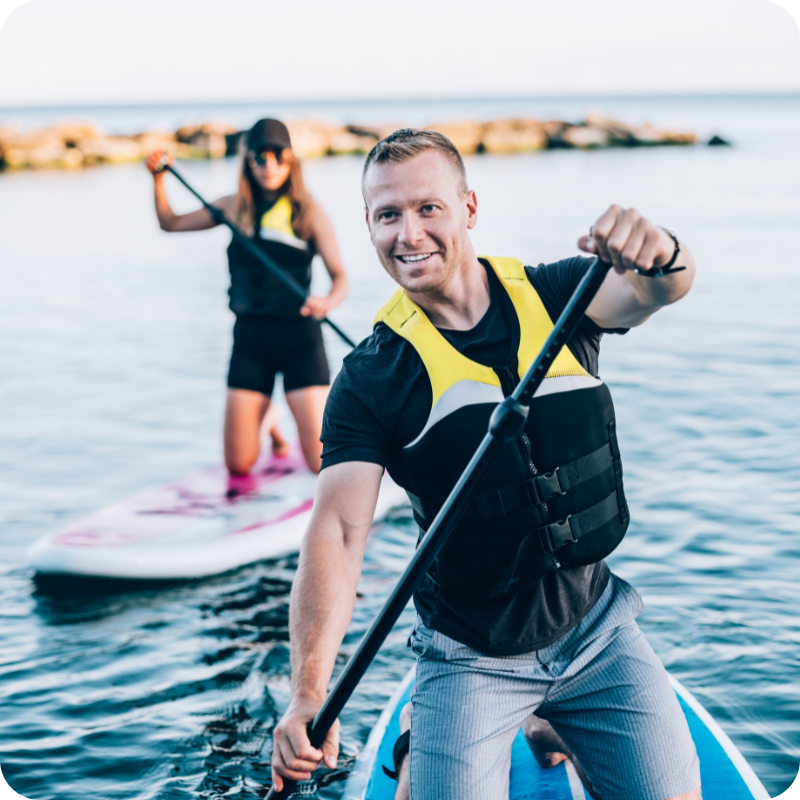
Always wear a properly sized and fitted PFD or lifejacket, ideally in a bright colour;
Bring all the equipment required for the activity, including a leash suited to the type of paddling, a whistle, drinking water and a waterproof means of communication;
In whitewater, use a quick-release waist leash designed for this type of environment;
Avoid alcohol or any substance that may impair judgment, reaction time or physical abilities;
When paddling in the evening or in reduced visibility, carry the necessary equipment to ensure you are clearly visible.
To reduce fatigue when paddling on a river, begin your route by travelling upstream to make the return trip easier.
In windy conditions, start by paddling into the wind and plan your return with the wind at your back.
Falling into the water is one of the risks associated with stand-up paddleboarding. Wearing a PFD, having good control of the board and learning safe falling techniques can help reduce the risk of injury.