Press Room
This section provides members of the media with the Lifesaving Society’s latest news releases, as well as information and resources about its activities and key water safety issues.
The reproduction of content published on this website is permitted, provided that the Lifesaving Society is credited as the source and any publication embargoes are respected.
For additional information or to arrange an interview with our spokesperson, please contact our Communications team.
MONTREAL, July 19, 2026 – The Lifesaving Society is proud to launch National Drowning Prevention Week (NDPW), taking place across Quebec from July 19 to 25, 2026. This annual awareness campaign brings together hundreds of organizations, municipalities, aquatic facilities, day camps and partners around a shared goal: preventing drowning and promoting safe behaviours in, on and around the water.
This year's theme, "Being Well Prepared Is the Foundation of Water Safety," reminds everyone that a safe day around water begins long before arriving at the destination. Planning ahead, understanding the risks, bringing the appropriate equipment and making informed decisions are simple actions that can help prevent incidents.
A Week Dedicated to Prevention
Each day of National Drowning Prevention Week will highlight an essential aspect of water safety, raising awareness about the leading factors contributing to drowning. Throughout the week, the public will be encouraged to learn more about:
- Fatal and non-fatal drowning;
- Open water safety;
- Pool safety;
- The importance of learning to swim through the Swim to Survive program;
- Active supervision of children;
- The risks associated with alcohol and drug use;
- Personal Flotation Device (PFD) use and boating safety.
Through information booths, demonstrations, family activities, contests, educational workshops and social media campaigns, National Drowning Prevention Week ambassadors will reinforce one important message: drowning is preventable when everyone does their part.
Child Supervision: A Responsibility That Requires Preparation
One of this year's key messages focuses on the active supervision of children. For young children, drowning happens quickly and silently, often following only a brief lapse in attention. The Lifesaving Society reminds parents and caregivers that supervision must be active, constant and free from distractions.
If your child is not within arm's reach, they are already too far away.
To help families put this important practice into action, the Lifesaving Society continues its partnership with Club Piscine to promote the Designated Water Watcher concept. The Designated Water Watcher whistle bracelet clearly identifies one adult who is responsible for supervising children during swimming activities, ensuring this important responsibility is never assumed—or forgotten. In addition to raising awareness, this initiative supports the Lifesaving Society's drowning prevention efforts, with $2 from every bracelet sold donated to the organization.
Being Prepared Starts Before Leaving Home
Preparation remains one of the most effective ways to reduce risk. Before taking part in any aquatic activity, everyone should:
- Bring the equipment appropriate for the activity;
- Check weather conditions;
- Learn about the characteristics of the body of water;
- Wear a Personal Flotation Device (PFD) whenever appropriate;
- Plan for active child supervision;
- Avoid alcohol and drugs;
- Ensure everyone has the swimming and water competency skills needed to participate safely.
Just a few minutes of preparation can make all the difference.
"Prevention begins long before anyone enters the water. Being well prepared means making informed choices, anticipating risks and looking out for one another. National Drowning Prevention Week reminds us that simple actions can save lives."
Raynald Hawkins, Executive Director
Lifesaving Society – Quebec Branch
A Province-Wide Movement
Throughout the week, hundreds of participating organizations will bring National Drowning Prevention Week to life within their communities through activities tailored to local needs. On July 25, World Drowning Prevention Day, proclaimed by the World Health Organization and recognized by the United Nations, the public is encouraged to wear blue, share water safety messages and participate in local events supporting drowning prevention.
Everyone Can Be a Water Safety Ambassador
The Lifesaving Society invites Quebecers to visit www.lifesaving.qc.ca/ndpw to discover activities taking place across the province, download educational resources and learn how they can participate in this important awareness campaign.
Whether by sharing a social media message, organizing a local activity, wearing a Personal Flotation Device, serving as a Designated Water Watcher or simply reminding friends and family about safe behaviours around water, everyone can help make National Drowning Prevention Week a success.
Because drowning is preventable, let's make prevention a habit and water safety a shared responsibility. Together, let's help build a safer summer for everyone.
– 30 –
About the Lifesaving Society
The Lifesaving Society is a non-profit organization dedicated to preventing drowning and water-related injuries through education, training, research, sport and community partnerships. Every year, it reaches hundreds of thousands of people with programs and initiatives that promote safe behaviours in, on and around the water.
Media Contact
Raynald Hawkins, Executive Director
Lifesaving Society – Quebec Branch
514-435-5342
TROIS-RIVIÈRES, Monday, June 22, 2026 – Jean Boulet, Minister of Labour and Minister Responsible for Canadian Relations, the Lifesaving Society, the Régie du bâtiment du Québec (RBQ), and partners Aquam, All Tides and Canadian Tire are pleased to announce the launch of the 20th annual Brigade Splash summer tour across Quebec.
For two decades, Brigade Splash has been raising awareness among swimmers, lifeguards and aquatic facility managers about their shared responsibility for water safety and the importance of adopting safe behaviours at both indoor and outdoor aquatic facilities. Brigade Splash remains an essential part of the summer season, supporting the Lifesaving Society's mission to encourage safe aquatic and boating activities and help prevent drowning.
This year's campaign is built around the theme "The Best Rescue Is the One That Never Has to Happen." Too often, prevention is overlooked as the most effective rescue of all. Recognizing hazardous situations, ensuring aquatic facilities meet safety standards and choosing supervised swimming areas are all actions that help prevent incidents and save lives.
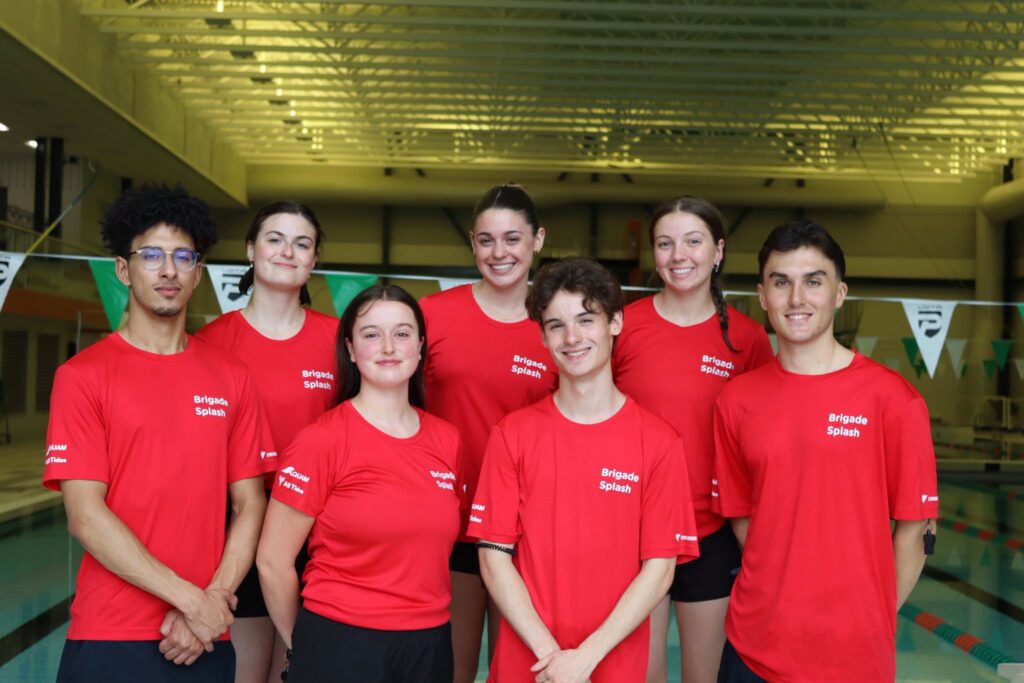
The 2026 campaign also builds on recent initiatives promoting compliance with Quebec's updated pool safety regulations and recognizing the vital role of lifeguards. Throughout the summer, Brigade Splash will travel across the province, encouraging Quebecers to make prevention their first line of defence.
"Today, I am very pleased to mark the 20th anniversary of Brigade Splash, which plays an essential role in raising awareness among Quebecers in every region about the importance of staying vigilant around water. Every drowning is one too many, and Brigade Splash reminds us that while water safety is everyone's responsibility, it begins with each individual. I encourage everyone to exercise caution. Your safety around water depends on simple actions and responsible decisions. Every life deserves to be protected."
Jean Boulet
Minister of Labour and Minister Responsible for Canadian Relations
"In Quebec, only one percent of drownings occur in supervised aquatic environments. This statistic highlights the critical role played by lifeguards, as well as aquatic facility managers who work to provide safe and compliant facilities for everyone. The launch of Brigade Splash marks the beginning of our summer awareness campaign, reminding Quebecers that prevention is the key to reducing the risk of drowning."
Raynald Hawkins
Executive Director, Lifesaving Society – Quebec Branch
Brigade Splash 2026
Throughout the summer, Brigade Splash will travel across Quebec promoting drowning prevention and water safety.
Recognizing that water safety is a shared responsibility, Brigade Splash ambassadors work with a wide range of audiences. They provide specialized training for lifeguards, evaluate aquatic facilities and share recommendations with facility managers. They also lead educational workshops and interactive activities for swimmers and children attending day camps.
To follow Brigade Splash throughout the summer, visit www.brigadesplash.com, follow Brigade Splash on Facebook, or connect with the Lifesaving Society on Instagram and TikTok.
Brigade Splash is made possible through the valued support of the Ministry of Labour, the Régie du bâtiment du Québec (RBQ), Aquam, All Tides, and Canadian Tire.
– 30 –
About the Régie du bâtiment du Québec (RBQ)
With offices throughout Quebec, the Régie du bâtiment du Québec (RBQ) is responsible for ensuring construction quality and public safety in the areas of buildings, electricity, plumbing, gas, petroleum equipment, pressure installations, elevators, ski lifts, amusement rides, bathing facilities and energy efficiency.
The RBQ oversees the application of the Building Act and related regulations within its areas of responsibility. It is also responsible for licensing contractors to ensure their integrity, competence and financial solvency. As the authority responsible for enforcing the Regulation respecting Safety in Public Baths, the RBQ actively supports public awareness initiatives promoting safety at swimming facilities.
About the Lifesaving Society
For more than a century, the Lifesaving Society has been dedicated to preventing drowning and water-related injuries. As Canada's national organization for drowning prevention and lifesaving, it works to save lives by promoting water safety, educating the public, training competent lifeguards and advancing research in drowning prevention.
Media Contact
Raynald Hawkins, Executive Director
Lifesaving Society – Quebec Branch
514-435-5342
LAVAL, May 25, 2026 – Canada's top lifesaving sport athletes will gather at the Laval Aquatic Complex from May 29 to 31, 2026, for the 2026 Canadian Pool Lifesaving Championships. Presented by Aquam, the championships will welcome male and female athletes aged 15 and older. The competition will feature 11 events showcasing speed, technical skill, determination and the lifesaving abilities that define the sport. The championships also represent the final stage in the selection process for the Canadian National Team that will compete at the 2026 Lifesaving World Championships in South Africa this November. With a decision on the inclusion of lifesaving sport in the Brisbane 2032 Olympic Games expected later this year, several athletes competing in Laval could one day represent Canada on the Olympic stage.
Athletes will compete for national titles in front of spectators, members of the community and media at the Laval Aquatic Complex. Competition begins at 8:00 a.m. on May 29, with the final championship session taking place on May 31 at 6:35 p.m.
"We are fortunate to host the Canadian Pool Lifesaving Championships at the Laval Aquatic Complex, a modern, high-quality facility that is easily accessible to athletes from across the country," said Wendy Schultenkamper, Interim Executive Director of the Lifesaving Society Canada. "The success of this event is made possible through the expertise of the Lifesaving Society – Quebec Branch and the North Shore Lifesaving Club, which has offered lifesaving sport programs in Laval and Blainville since 2013. These championships will showcase the exceptional talent of our athletes while demonstrating the power of sport to bring communities together and inspire future generations."

The public is invited to attend. Admission and parking are free, and spectators are encouraged to fill the stands and experience—or rediscover—this unique sport whose ultimate purpose is to save lives.
Event Information
What: 2026 Canadian Pool Lifesaving Championships
When: May 29–31, 2026, beginning at 8:00 a.m. daily | Finals: May 31 at 6:35 p.m.
Where: Laval Aquatic Complex, 2205 Terry Fox Avenue, Laval, Quebec
Admission: Free
Parking: Free
Who Can Attend: Open to the public
– 30 –
About the Lifesaving Society Canada
The Lifesaving Society is an independent national charitable organization dedicated to preventing drowning and water-related injuries through its training programs, Water Smart® public education initiatives, aquatic safety management services, drowning prevention research and lifesaving sport.
The Society represents Canada internationally through the Commonwealth Royal Life Saving Society and is a Full Member of the International Life Saving Federation (ILS). It also serves as the national governing body for lifesaving sport, a sport recognized by the International Olympic Committee (IOC) and the Commonwealth Games Federation.
Media Contact
Dave Beaumont-Vaillancourt
Coordinator, Lifesaving Sport, Government Relations and Corporate Partnerships
dvaillancourt@lifesaving.ca
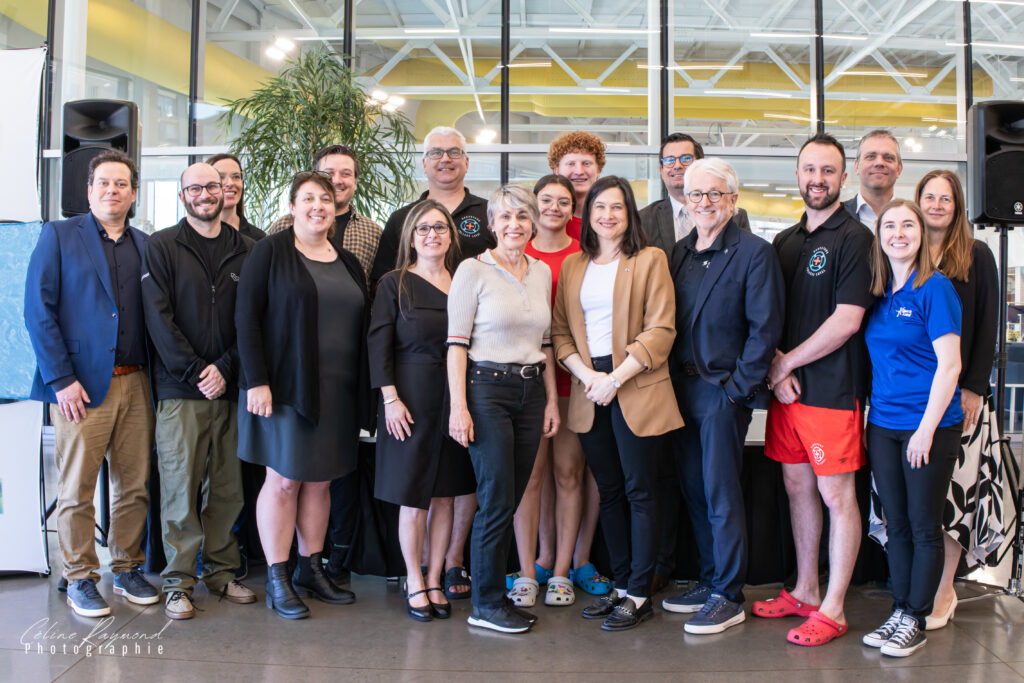
LAVAL, Quebec, April 23, 2026 – A meaningful step toward saving lives was taken today in Laval as partners from the education, municipal, and community sectors gathered for a press conference to mark the first regional Swim to Survive day at the Laval Aquatic Complex.
This essential drowning prevention program aims to equip young people with fundamental aquatic survival skills, enabling them to respond appropriately in emergency situations and ultimately reduce the risk of drowning. Led by Sports Laval, the initiative was made possible through the collaboration of several committed partners, including the Centre de services scolaire de Laval, Collège Laval, the Lifesaving Society, EAU Laval, and the City of Laval. Together, these organizations joined forces to make the program accessible and provide aquatic safety training to hundreds of students.
“Sports Laval is proud to contribute to a future where every child not only has access to sport, but also to the essential skills needed to stay safe in and around the water.”
Geneviève Cossette, President, Sports Laval
The Swim to Survive program is built around three key skills: recovering to the surface after an unexpected entry into deep water, floating for one minute, and swimming to a safe location. These simple yet critical skills can mean the difference between life and death in an unexpected water emergency.
The program has already generated positive outcomes for both participating students and the instructors and lifeguards delivering the training.
“I would recommend this program to all children, whether they know how to swim or not, because it’s important to be able to take care of yourself in the water,”
Alice Dumont, Grade 4 student at Sainte-Dorothée Elementary School
“I watched a young boy swim on his own for the first time. That’s when I realized that this program is more than just lessons. It changes lives… and it can save them too,”
Dalila Gosselin, Grade 11 student and lifeguard at Collège Laval
“The Swim to Survive program is a unique, accessible, and free opportunity for students in our region to learn practical, life-saving skills. They learn how to react safely, stay calm, orient themselves, float, and build confidence in the water. I would like to recognize the commitment of our partners, as well as the exceptional work of the educators and lifeguards who make this program possible. Their dedication directly contributes to the safety and well-being of our youth.”
Yves Michel Volcy, Director General, Centre de services scolaire de Laval
The program was delivered from December 2025 through April 2026, reaching seven elementary schools in Laval and involving 377 students and nearly 50 certified secondary-school lifeguards.
– 30 –
About Swim to Survive
Developed by the Lifesaving Society, Swim to Survive is a nationally recognized program designed to reduce the risk of drowning by teaching youth aged 8 to 14 the essential skills needed to survive an unexpected fall into deep water.
Interview Requests
Véronique Rainville
Coordinator, Sports Laval
450-664-1917
MONTREAL, January 7, 2026 – Although 2026 has only just begun, the Lifesaving Society is already presenting a preliminary overview of drowning fatalities that occurred in Quebec during 2025.
A total of 61 drowning deaths were recorded*, a figure that remains generally consistent with recent years, compared to 60 fatalities in 2024, 84 in 2023, and 61 in 2022.
This stability reflects the sustained efforts invested in aquatic safety and drowning prevention. It highlights the ongoing commitment of municipalities, community partners, and water safety professionals. Behind these numbers, however, are devastating human tragedies that remind us every drowning is preventable.
“The 2025 data show that prevention efforts continue to help contain the number of drownings, while reminding us that vigilance must remain constant. Drowning happens quickly and silently, often when least expected, as tragically illustrated by the double drowning that occurred on Christmas Eve in Lanaudière, claiming the lives of a man and a child. Our thoughts are with their loved ones. These tragedies underscore the importance of continuing our collective efforts in prevention, education, and public awareness to help prevent avoidable losses of life.”
Raynald Hawkins, Executive Director, Lifesaving Society
An Evolving Regional Picture
Several regions experienced significant improvements in 2025, while others recorded increases in drowning fatalities. The Côte-Nord region returned to the list of areas with the highest number of drownings, ranking first with 12 deaths after recording none the previous year. Lanaudière (11 drownings), Montreal (7 drownings), and Outaouais (6 drownings) also ranked among the regions with the highest numbers and showed increases from 2024 to 2025. Conversely, notable decreases were observed in Abitibi-Témiscamingue, Bas-Saint-Laurent, Capitale-Nationale, Estrie, Mauricie, and Montérégie.These regional variations highlight the importance of tailoring prevention efforts to local realities and the specific aquatic environments present across the province, while recognizing that no region is immune to tragedy.
Natural Bodies of Water Remain the Greatest Risk
In 2025, 85% of drownings occurred in natural aquatic environments such as lakes, rivers, and the St. Lawrence River, compared with 76% in 2024. For the Lifesaving Society, this remains a significant concern. These environments are often unsupervised and subject to rapidly changing conditions, making them inherently higher-risk locations. The adoption of safe behaviours, particularly wearing a personal flotation device (PFD), could significantly reduce the number of fatalities occurring in these settings. Two drownings were recorded this year at supervised swimming areas: one at a public pool and one at a designated beach. While such incidents remain extremely rare in supervised environments, both were linked to cardiac events. These cases demonstrate the effectiveness of professional supervision and reinforce the importance of choosing supervised swimming locations whenever possible.
Victim Profile Remains Consistent
The profile of drowning victims remained similar to previous years. Men accounted for more than 80% of all drowning fatalities recorded in 2025. Many incidents occurred during recreational activities such as boating (36%) and swimming (13%), often in situations where important safety measures, including the use of a personal flotation device, were not followed.
Young Children's Safety Remains a Priority
Although the overall number of drownings remained stable, five drownings involving children between the ages of 0 and 5 were recorded in 2025, down from seven in 2024. Nevertheless, these incidents remain deeply concerning, particularly in residential settings.
Research conducted in 2024 by Dr. Hussein Wissanji demonstrated that for every child drowning fatality, several additional children are treated in emergency departments for non-fatal drowning incidents. A lack of direct supervision and the absence of physical barriers around residential pools remain among the most frequently identified risk factors. In response, the Lifesaving Society and Dr. Hussein Wissanji continue to work together to advance changes to the implementation timeline of Quebec’s updated residential pool safety regulation, currently scheduled to come into effect on September 30, 2027. In November 2025, the organizations formally requested that all residential pools become subject to the regulation as of June 1, 2026.
The original compliance date of September 30, 2025, was intended to help achieve a summer free of child drownings related to unrestricted pool access, a goal that remains attainable.
Continuing Prevention Efforts Together
The 2025 results demonstrate that prevention saves lives. They also remind us that aquatic safety depends on simple but essential actions: learning to swim, wearing a lifejacket or PFD, actively supervising children, and following safety guidelines in, on, and around the water.
While winter is now well underway, it is important to remember that this season is not without risk. On average, seven drowning deaths occur each year during the winter months. Activities on ice carry real dangers, particularly when ice thickness is uncertain. The message remains clear: When in doubt, stay off the ice. The public is encouraged to consult the Lifesaving Society’s winter safety resources and prevention campaigns.
In 2026, the Lifesaving Society will continue to expand its awareness and education initiatives, particularly among higher-risk groups, to help ensure that aquatic activities remain synonymous with enjoyment, confidence, and safety.
To explore Quebec drowning statistics for 2025 and previous years, as well as our safety tips, visit the drowning prevention section of our website.
*Preliminary data based on information reported in the media.
– 30 –
Source and Analysis: Anne-Marie Francoeur
Communications and Public Relations Manager, Lifesaving Society
514-252-3100 | 1-800-265-3093
Interview Requests:
Raynald Hawkins
Executive Director, Lifesaving Society
Media Line: 514-435-5342
MONTREAL, December 9, 2025 – Winter is part of Quebec's identity, but beneath its beautiful snowy landscapes lie frozen surfaces that can be unpredictable and dangerous. Every year, incidents occur when people venture onto uncertain ice outside organized and monitored areas. To help reduce these risks and equip the public with reliable safety information, the Lifesaving Society is launching its Ice Safety Campaign, made possible through the support of the Québec Safety-Integrity Program. Its goal is simple but essential: to provide the knowledge people need to enjoy winter safely.
The campaign's message is clear: "When in Doubt, Stay Off the Ice." Short, memorable and easy to understand, this slogan serves as the foundation for all campaign materials. It reminds everyone that when conditions are uncertain, choosing caution is always the safest decision. The campaign features a series of educational videos designed to support Quebecers in their favourite winter activities, including ice fishing, skating and hockey, hiking, snowshoeing, cross-country skiing, snowmobiling and off-road vehicle use. While prevention is always the first priority, accidents can still happen. For that reason, the campaign also includes a self-rescue video demonstrating techniques for escaping icy water after breaking through the ice.
Safety Tips for Every Winter Activity
The campaign highlights simple precautions that can help everyone enjoy winter safely. For ice fishing, assess the surroundings, measure ice thickness in several locations and avoid going out alone. For skating and hockey, stay close to shore whenever possible and ensure there is at least 10 cm (4 inches) of clear, solid ice to support one person. When snowshoeing or cross-country skiing, plan your route, tell someone where you are going and never assume a frozen body of water is safe to cross. For snowmobiling and off-road vehicles, stick to marked trails, where ice conditions are monitored. Taking shortcuts across lakes can be extremely dangerous. The campaign also promotes the 1-10-1 Rule for cold-water self-rescue: 1 minute to regain control of your breathing; 10 minutes of meaningful movement to attempt self-rescue; Approximately 1 hour before hypothermia becomes life-threatening.
Every Decision Matters
Quebec winters offer countless opportunities to enjoy the outdoors, but they also require preparation and sound judgment. Through this campaign, the Lifesaving Society hopes to reduce incidents involving unsafe ice by providing practical, reliable and accessible information. Whether it's checking ice thickness, sharing your route with someone before leaving, or choosing a marked trail instead of a risky shortcut, every decision contributes to a safer winter. Together, let's make every outing on the ice enjoyable—and never a preventable tragedy.
To support the campaign, educational videos, practical safety tips and printable posters are now available on our website in the Prevention Campaigns section. We encourage our partners, organizations and municipalities to share the videos, promote the safety messages through their networks and display the campaign materials in their facilities to help reach as many people as possible.
Together, we can help make winter safer for everyone.
– 30 –
About the Lifesaving Society
The Lifesaving Society – Quebec Branch is a non-profit organization dedicated to preventing drowning and water-related injuries. Through education, partnerships and public awareness initiatives, the Society works to make aquatic and waterfront environments safer for everyone.
Media Contact
Raynald Hawkins, Executive Director
Lifesaving Society – Quebec Branch
514-435-5342
MONTREAL, September 19, 2025 – The Lifesaving Society received with deep concern the announcement by Minister Geneviève Guilbault granting residential pool owners at least an additional year before complying with updated pool safety requirements, which were originally scheduled to take effect in just 11 days, on September 30, 2025.
This delay postpones the implementation of critical measures designed to protect children, families, and older adults from preventable drowning incidents.
Every summer, lives are lost around residential pools. According to research conducted by the McGill University Health Centre under the leadership of Dr. Hussein Wissanji and in collaboration with Quebec’s National Institute of Public Health (INSPQ), for every child drowning fatality, ten additional children are admitted to hospital following non-fatal drowning incidents.Compliant fencing and self-latching gate systems remain among the most effective tools for preventing these tragedies. While constant supervision is essential, coroners continue to identify unsecured and non-compliant pool access as one of the leading contributing factors in drowning deaths.
“This delay sends the wrong message, suggesting that safety can wait. A drowning can occur in a matter of seconds, and every day of delay unnecessarily exposes Quebec families to a real yet preventable risk. While some pool owners have expressed concerns about losing grandfathered rights, it is essential that any exception or accommodation continue to respect the principles of the current regulation, ensuring that pools remain inaccessible when not in use. For us, this is not an economic issue, it is a matter of life and death. We stand ready to support the government and municipalities in their analysis and implementation efforts, as we have done since 2010.”
Raynald Hawkins, Executive Director, Lifesaving Society
Regulatory Timeline
2010 – Adoption of pool safety regulations for all new installations.
July 1, 2021 – New rules adopted for all pool installations, with grandfathering provisions eliminated effective July 1, 2023.
June 16, 2023 – Compliance deadline postponed from July 1, 2023, to September 30, 2025.
September 19, 2025 – New postponement announced, granting at least one additional year.
Safety Must Come First
The Lifesaving Society is calling on the government to reaffirm that the next implementation date will be final and non-negotiable, while supporting pool owners through clear and accessible educational resources.
Further delays foster a false sense of security and create the perception that risk can be eliminated through administrative extensions. We urge Minister Guilbault to remain focused on the original objective of the regulation, namely ensuring that all residential pools are compliant before the next swimming season, with a revised implementation deadline of June 1, 2026.
A Call for Collective Responsibility
The Lifesaving Society reiterates that it is unacceptable to weaken or postpone regulations that save lives, and that aquatic safety must remain a public priority.
Every pool owner has a responsibility to contribute to drowning prevention.
Today, the Lifesaving Society calls upon citizens, elected officials, media representatives, and partners to mobilize around this issue. Lives lost cannot be recovered. Every fence installed, every gate secured, and every preventive measure taken brings Quebec closer to a shared objective: ensuring that no child and no family experiences a preventable drowning tragedy.
Together, let us send a clear message: safety should never have to wait.
– 30 –
Interview Requests:
Raynald Hawkins
Executive Director, Lifesaving Society
Media Line: 514-435-5342
Phone: 514-252-3100 | 1-800-265-3093
Lifesaving Society Commends Minister Andrée Laforest’s Leadership and Calls for Maintaining the September 30, 2025 Deadline for Residential Pool Safety Compliance
MONTREAL, Thursday, September 4, 2025 – The Lifesaving Society wishes to extend its sincere gratitude to Andrée Laforest, who announced today her resignation as Minister of Municipal Affairs and Member of the National Assembly for Chicoutimi, for her unwavering commitment to public safety. Her leadership played a pivotal role in strengthening Quebec's Residential Swimming Pool Safety Regulation in 2021, particularly through the elimination of grandfathering provisions that exempted certain pools installed prior to 2010.
“Thanks to Minister Laforest’s determination, Quebec now has a clear and equitable regulatory framework that better protects children and families. We are grateful for her commitment to maintaining a timeline that is essential to drowning prevention.”
Raynald Hawkins, Executive Director, Lifesaving Society Quebec
In 2021, regulatory amendments confirmed that all residential pool owners would be required to comply with safety standards, ending the exemption previously granted to pools installed before November 1, 2010. The compliance deadline was set for September 30, 2025, and the government has since provided additional information to support public awareness.
It is important to note that this deadline was already postponed in 2023, having originally been scheduled for July 1, 2023, to provide existing pool owners with more time to achieve compliance. This compromise should not be extended any further.
As the September 30, 2025 deadline approaches, the Lifesaving Society urges the next Minister of Municipal Affairs to maintain the established timeline and avoid any additional delays. Requirements such as appropriate fencing, secure access control measures, compliant clearances, and other safety provisions are well known, practical, and focused on preventing accidents, particularly among young children.
The Lifesaving Society will continue its efforts to inform and support municipalities, pool owners, and industry professionals in achieving compliance and reducing drowning incidents across Quebec.
– 30 –
About the Lifesaving Society
For more than a century, the Lifesaving Society has worked to prevent drowning and water-related injuries. The Lifesaving Society is Canada's national drowning prevention and water safety organization. It is committed to promoting aquatic safety and saving lives through public education, lifeguard training, and research in drowning prevention.
For Additional Information or Interview Requests
Raynald Hawkins
Executive Director, Lifesaving Society Quebec
514-435-5342
TROIS-RIVIÈRES, Thursday, June 26, 2025 – Jean Boulet, Minister of Labour and Minister Responsible for the Mauricie, Abitibi-Témiscamingue, and Nord-du-Québec Regions, together with the Lifesaving Society, the Régie du bâtiment du Québec (RBQ), and partners Aquam, All Tides, and Canadian Tire, are pleased to announce the launch of the 19th annual Splash Brigade summer tour across Quebec.
This initiative aims to raise awareness among swimmers, lifeguards, and aquatic facility operators about shared responsibility for aquatic safety and the importance of adopting safe behaviours around both indoor and outdoor aquatic facilities. The Splash Brigade remains an important and relevant component of the summer season, supporting the Lifesaving Society's mission of promoting safe aquatic and boating activities to prevent drowning.
The Splash Brigade returns this summer with a renewed focus on aquatic safety. While continuing to promote the lifeguarding profession, a highly successful theme from last year, the 2025 tour will be guided by the theme:
"Safe Splash: Dive Into Compliance, Dive Into Safety!"
Under this banner, the Splash Brigade will travel throughout Quebec to help ensure that aquatic facilities are informed about safety requirements and operating in compliance with applicable standards, with the goal of providing the public with safe, well-designed, and properly supervised swimming environments throughout the summer.
“This collaboration between the Lifesaving Society and the RBQ is essential. It resonates strongly with me because we all share the same goal of preventing unfortunate accidents. Through awareness initiatives and proactive measures, we can reduce unsafe behaviours among swimmers and minimize risk factors. Our common objective is clear: to further prevent accidents in public swimming environments through increased awareness of safety requirements and better identification of potential hazards.”
Jean Boulet, Minister of Labour and Minister Responsible for the Mauricie, Abitibi-Témiscamingue, and Nord-du-Québec Regions
“Aquatic safety is everyone’s responsibility. The Splash Brigade, in collaboration with the Régie du bâtiment du Québec, plays an essential role in educating the public and ensuring that facilities meet established safety standards. By working together, we can provide safe swimming environments for all while also promoting the important work performed by lifeguards. With the implementation of new regulations, we are taking another significant step toward preventing accidents and saving lives.”
Raynald Hawkins, Executive Director, Lifesaving Society Quebec
As part of its annual tour across Quebec, the Splash Brigade will once again deliver advanced aquatic safety training sessions for lifeguards. During site visits, team members will also meet with aquatic facility managers and assess compliance with provincial safety standards using inspection tools provided by the RBQ.
The tour will also include lifesaving introduction workshops in day camps, along with educational and recreational activities at participating aquatic facilities. These initiatives are designed to introduce the public to the aquatic sector while inspiring interest in careers in lifesaving and water safety.
To follow the Splash Brigade this summer, visit www.brigadesplash.com, the Brigade Splash Facebook page, the Lifesaving Society Instagram account, and its TikTok account.
The Splash Brigade is made possible through the valuable support of the Ministry of Labour, the Régie du bâtiment du Québec, Aquam, and Canadian Tire.
– 30 –
About the Régie du bâtiment du Québec (RBQ)
Present throughout Quebec, the RBQ's mission is to ensure construction quality and public safety in areas such as building construction, electricity, plumbing, gas systems, petroleum equipment, pressure installations, elevators, ski lifts, amusement rides, swimming facilities, and energy efficiency. The RBQ oversees the application of the Building Act and related regulations within its areas of jurisdiction. It is also responsible for contractor licensing to ensure integrity, competence, and financial solvency. As the authority responsible for enforcing the Regulation Respecting Safety in Public Baths, the RBQ contributes to various public awareness initiatives promoting safety in swimming environments.
About the Lifesaving Society
For more than a century, the Lifesaving Society has worked to prevent drowning and water-related injuries. The Lifesaving Society is Canada's national drowning prevention and water safety organization. It is committed to promoting aquatic safety and saving lives through public education, lifeguard training, and research in drowning prevention.
For Additional Information or Interview Requests
Raynald Hawkins
Executive Director, Lifesaving Society Quebec
514-435-5342
MONTREAL, January 8, 2025 – As it does at the beginning of every year, the Lifesaving Society is releasing its annual review of drowning fatalities that occurred over the previous 12 months. In 2024, 59 drowning deaths* were recorded according to preliminary data. While this figure is encouraging compared to the 84 drownings recorded in 2023 and 61 in 2022, it remains deeply concerning.
Each drowning represents a preventable loss of life, and the Lifesaving Society remains firmly committed to raising awareness and educating the public about safe behaviours in, on, and around the water.
“While the decrease in drownings in 2024 is an encouraging sign and reflects the collective efforts invested in prevention, it also reminds us that our mission is far from complete. Every life lost to drowning is a tragedy that devastates families, leaves loved ones grieving, and raises questions about what could have been done to prevent the incident. We must continue to strengthen our public awareness efforts, expand educational initiatives, and promote constant vigilance around aquatic environments. Water safety is a shared responsibility, and every action counts in protecting lives and building a future where these tragedies become increasingly rare.”
Raynald Hawkins, Executive Director, Lifesaving Society
Safer Regions, but Continued Vigilance Is Essential
In 2024, Montérégie remained the region with the highest number of drowning incidents, recording 11 drownings, down from 18 in 2023.
New among the regions experiencing an increase in drowning fatalities were Mauricie, with 10 drownings (up from 4 in 2023), and Lanaudière, with 7 drownings (up from 2 in 2023).
Several regions, however, recorded significant reductions in drowning incidents, including:
Capitale-Nationale: 1 drowning (10 in 2023)
Côte-Nord: 0 drownings (13 in 2023)
Saguenay–Lac-Saint-Jean: 4 drownings (11 in 2023)
These improvements reflect the collective efforts of local communities and ongoing prevention campaigns.
Nearly 71% of all drownings occurred in natural aquatic environments, including rivers, lakes, and the St. Lawrence River. No drownings were recorded at supervised swimming locations, such as public beaches or pools, in 2024. Incidents in supervised environments remain extremely rare, accounting for less than 1% of drowning fatalities annually, underscoring the importance of choosing supervised locations for aquatic activities.
An Unchanged Demographic Profile
Men continued to be disproportionately affected, accounting for 46 of the 59 drowning fatalities recorded in 2024. Women represented 11 cases, while the gender of two victims had not yet been determined.
Nearly half of all incidents occurred during boating or swimming activities, often in situations where appropriate safety equipment was not used or where individuals lacked basic swimming skills.
Still Too Many Child Drownings
Despite the overall decrease in drowning fatalities in 2024, the Lifesaving Society recorded seven drownings among children aged 0 to 5, the same number reported in 2023 despite the significantly higher total number of drownings that year.
As a result, young children accounted for a larger proportion of drowning fatalities in 2024, representing a 43% increase proportionally compared with the previous year.
According to research conducted in 2024 by Dr. Hussein Wissanji of the Research Institute of the McGill University Health Centre, for every child who dies from drowning, more than ten others visit emergency departments or are hospitalized following a non-fatal drowning incident.
Child drowning fatalities are significantly more likely to occur when children are not under direct supervision or when protective measures, such as compliant pool fencing, are absent. This is why the Lifesaving Society continues to emphasize the importance of ensuring that all residential pools comply with provincial safety requirements before September 30, 2025, when the updated regulations take full effect.
A Promising Decline, but More Work Remains
The reduction in drowning fatalities can be partially attributed to increased public awareness campaigns and strong collaboration among partners across Quebec. However, much work remains to be done.
Effective prevention relies on concrete actions, including:
Following water safety guidelines;
Wearing a personal flotation device (PFD) when appropriate;
Developing essential swimming and water survival skills;
Actively supervising children at all times around water.
In 2025, the Lifesaving Society will continue expanding its public education efforts and promoting programs aimed at the groups most at risk.
Every life matters. Together, we can ensure that every experience in and around the water is both enjoyable and safe.
*Preliminary data based on information reported in the media.
– 30 –
Source
Anne-Marie Francoeur
Communications and Public Relations Manager
Lifesaving Society
Media Line: 514-435-5342
Phone: 514-252-3100 or 1-800-265-3093