Swim to survive
Many young people say they know how to swim, but do they really? Playing in the water is one thing; knowing how to swim is another!
The Swim to Survive program, created by the Lifesaving Society to help prevent drowning, can be offered as an educational and active school outing.
In addition to playing a key role in drowning prevention, the program helps build self-esteem, encourages children to be active, and may even inspire them to visit aquatic facilities more regularly.
The Swim to Survive program is offered to students aged 8 and older (Grades 3 to 6).
The Swim to Survive Standard (the Standard) assesses each child’s swimming abilities and teaches the basic skills needed to survive an unexpected fall into deep water.
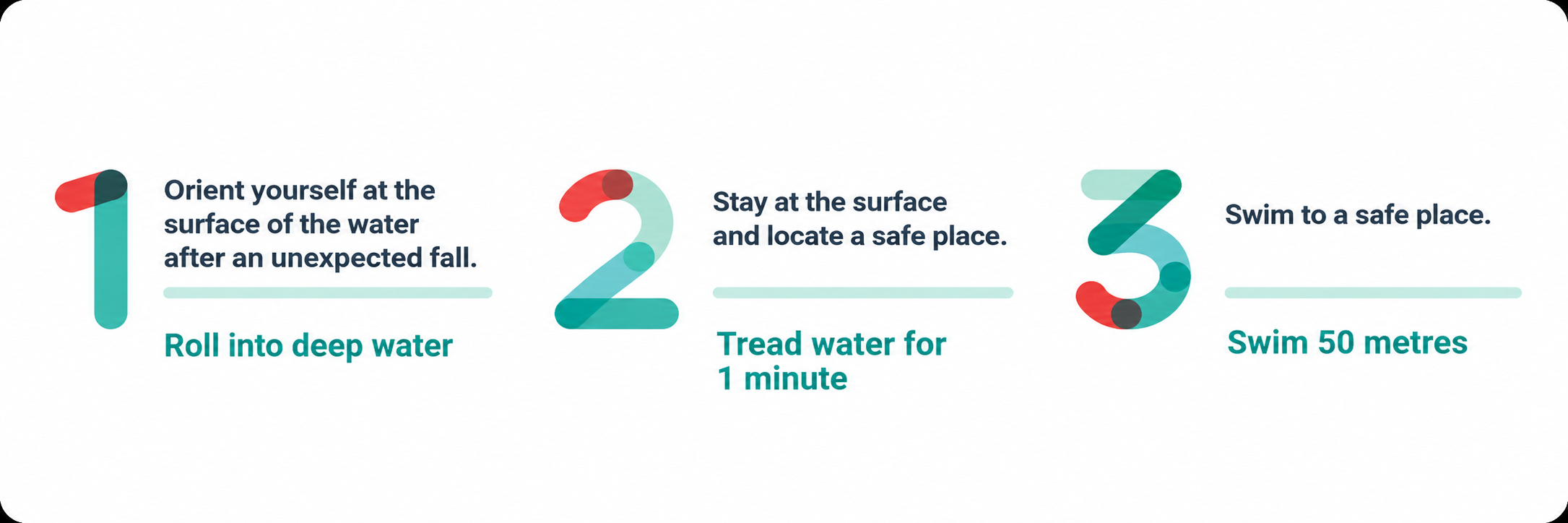
Why These Three Swimming Skills?
The three swimming skills taught are based on the Lifesaving Society’s Canadian Swim to Survive Standard. This standard defines the minimum skills required to survive an unexpected fall into deep water.
A person who can successfully perform these three skills under favourable conditions (wearing a swimsuit in a heated pool) should be able to reach a nearby place of safety following an unexpected fall into deep water under less favourable conditions (while wearing clothing, in cold water, etc.).
The Classroom Lessons Cover Three of the Following Four Topics:
Students will be able to:
Distinguish between safe and unsafe behaviours in swimming-related scenarios.
Explain why they should never swim alone.
Students will be able to:
List the characteristics of strong ice.
Distinguish between safe and unsafe behaviours in scenarios involving activities on ice.
Explain how to get out of the water if the ice breaks.
Students will be able to:
Demonstrate how to put on and fasten a PFD.
Identify safe behaviours to follow during boating activities.
Students will be able to:
Identify safe places to dive.
Identify potential consequences of diving in an unsafe environment.
The program must be offered to students in Grades 3 to 6 of elementary school.
Only organizations located in Quebec are eligible to apply for funding. Canadian organizations located outside Quebec must contact the Lifesaving Society branch in their region.
Each application may include a maximum of five schools. To request funding for more than five schools, please submit multiple applications.
Financial Assistance
To qualify for financial assistance:
Ensure that the eligibility criteria are met.
Establish a partnership with a local aquatic facility or school.
Book transportation, if applicable.
Obtain cost estimates from partners.
Complete the financial assistance application.
How Is the Amount of Funding You Are Eligible for Determined?
Following a review of the participation form, the person who submitted the financial assistance application will be informed of the anticipated amount provided by the Lifesaving Society to help fund the aquatic drowning prevention sessions.
The amount of funding will be determined according to the following criteria:
Students aged 8 to 14: Funding is provided by the Ministère de l’Éducation.
The amount is based on expenses related to transportation, pool rental, and aquatic staff wages (instructors and lifeguards), up to a maximum of $25 per student.
Please note that once the supporting documents and student assessment results have been received, the anticipated amount granted by the Lifesaving Society may be adjusted upward or downward.