Before Venturing onto the Ice
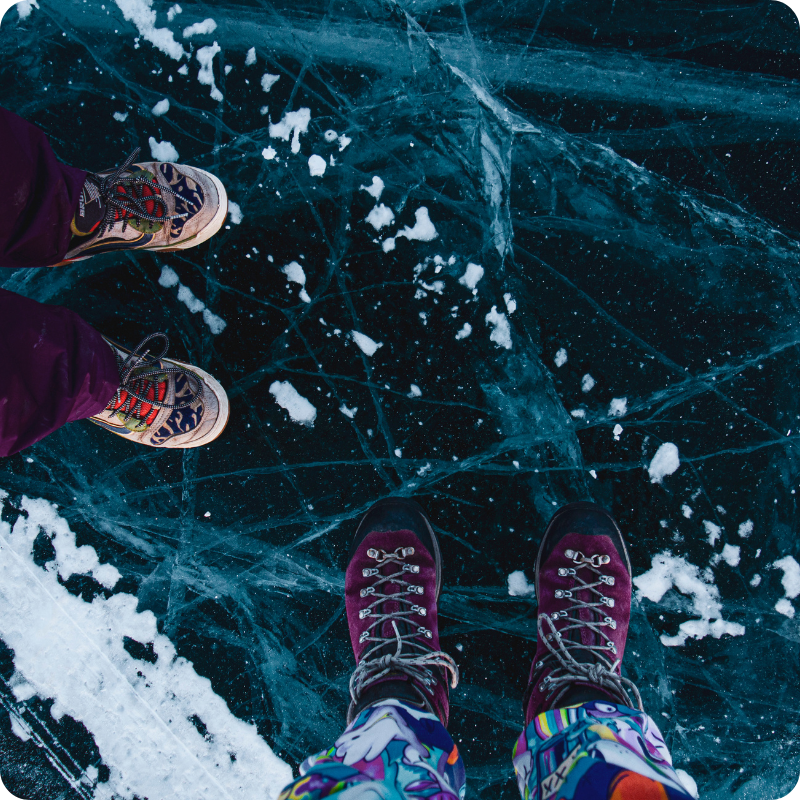
Natural ice is constantly changing. Its colour, composition, thickness and the environment in which it forms can provide clues about its condition, but none of these factors alone can guarantee that a surface is safe.
Before venturing onto a frozen body of water, it is important to understand how ice forms, what can weaken it and which warning signs should prompt you to turn back.
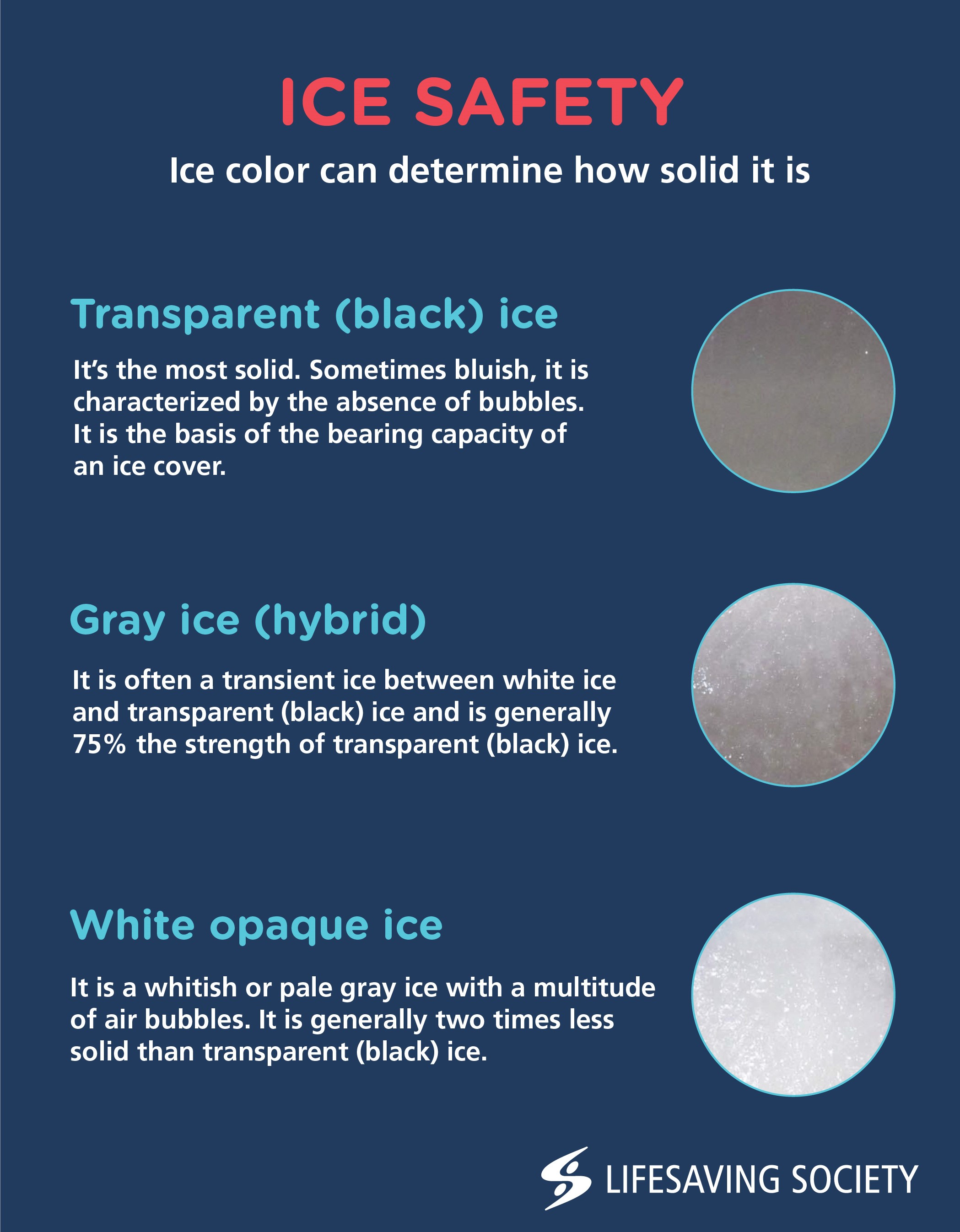
Not all ice has the same strength.
Blue or clear ice, when newly formed and uniform, is generally stronger than ice containing large amounts of air or ice that has undergone repeated freeze-thaw cycles.
White, opaque ice, sometimes called snow ice, contains more air. Its strength can vary considerably depending on its composition and density.
Grey ice generally indicates the presence of water, particularly as a result of melting. It should be considered dangerous.
Colour, however, is only one of several indicators. The appearance of the surface alone is never enough to determine the strength of the ice.
Ice that appears uniform can be much thinner in certain areas.
Currents can erode ice from below. This is one reason why river ice may vary more than ice on a body of water without significant currents. Inlets, outlets, springs and certain obstacles can also affect ice formation locally.
Docks, rocks and other structures can absorb heat from the sun, slowing ice formation or accelerating deterioration around them.
What lies beneath the ice is therefore just as important as what is visible on the surface.
Temperatures over the previous days provide important information about the possible condition of the ice.
A prolonged period of below-freezing temperatures generally promotes ice formation. Conversely, repeated freeze-thaw cycles can create layers and weaken its structure. Sunlight, rain and warmer temperatures also contribute to deterioration.
Ice that was strong enough a few days earlier may therefore no longer have the same characteristics.
The time of day can also make a difference, particularly on warmer days: a surface may deteriorate as it is exposed to sunlight and rising temperatures.
A snow-covered surface requires particular caution.
In addition to concealing cracks, holes and changes in the appearance of the ice, snow acts as an insulator. It can slow freezing and affect the formation of the ice beneath it.
Snow accumulation should therefore never be considered an additional layer of protection.
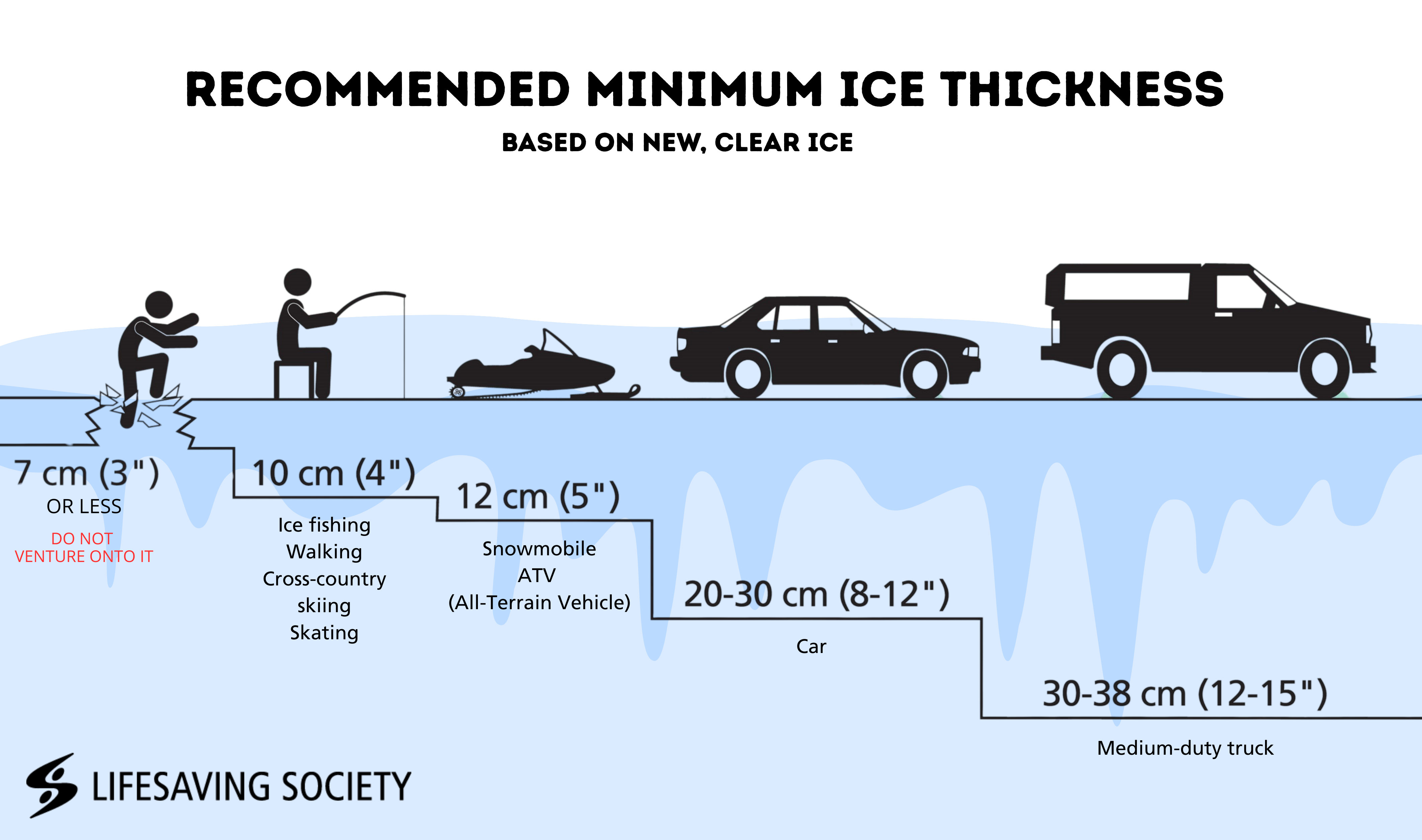
Thickness is an important factor when assessing ice, but a measurement taken at a single location does not necessarily represent the entire body of water.
The ice may be much thinner only a few metres away because of a current, spring, obstacle or other local conditions.
Ice quality must also be considered. The same thickness does not necessarily provide the same strength when the ice is clear and newly formed, white and porous, or deteriorated by thawing. Several factors must therefore always be assessed together.
Colour, thickness and weather conditions can help provide a better understanding of a frozen surface, but no natural ice can ever be considered completely risk-free.
An unusual crack, water on the surface, a change in colour, an open-water area, signs of thawing or simply uncertainty about the conditions are all reasons not to proceed.
When conditions are uncertain, the safest choice is to stay off the ice.