Caught in a Rip Current
Swimming in waves can quickly become dangerous when a rip current pulls a person away from shore and makes it difficult to swim back.
Rip currents, also known as rips, can form in areas where waves break across a wide stretch of shoreline. They are often associated with variations in water depth, such as sandbars, and can also form near structures such as docks and jetties.
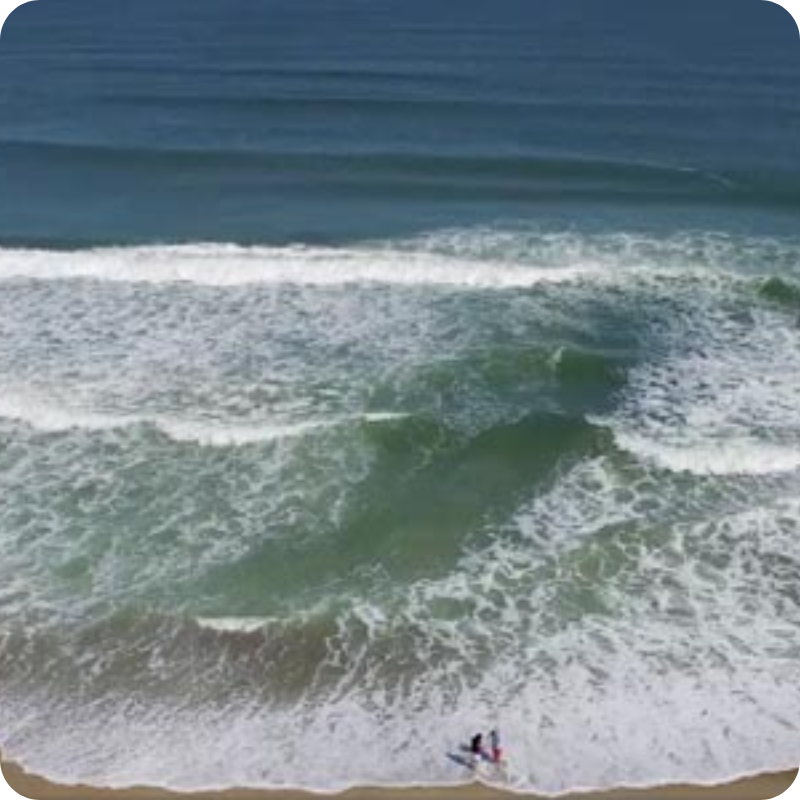 Found along ocean coastlines and in the Great Lakes, among other locations, rip currents form when water pushed toward shore by breaking waves flows back out through a relatively narrow channel. This movement can create a current strong enough to quickly carry a person away from shore.
Rip currents can be difficult to identify, even once in the water. Certain characteristics may help indicate their presence, but swimming in a supervised area remains one of the best ways to reduce the risks. Always follow posted beach signs and the instructions of lifeguards. Local forecasts and warnings can also provide information about swimming conditions.
Certain signs may indicate the presence of a rip current:
An area where the surface of the water appears calmer or where fewer waves are breaking than in surrounding areas;
A trail of foam, sand or debris that appears to be moving away from shore;
A difference in the colour or movement of the water compared with surrounding areas.
These signs may be easier to identify from a slightly elevated location that provides a broader view of the shoreline. However, the absence of visible signs does not mean that no rip current is present.
The National Oceanic and Atmospheric Administration (NOAA) also provides resources to help people better understand and recognize rip currents.
If caught in a rip current, certain actions can improve the chances of self-rescue:
Stay calm and conserve energy. A rip current generally pulls a person away from shore rather than underwater.
Signal for help. In a supervised area, attract the attention of a lifeguard.
Do not try to swim directly against the current toward shore. Doing so can quickly lead to exhaustion.
Float and regain control of your breathing. When possible, move parallel to the shoreline to get out of the current, then make your way back to shore when conditions allow.
Keep track of landmarks on shore to monitor your movement and better assess the situation.
If another person is caught in a rip current, entering the water to perform a rescue without the proper training and equipment can put a second person in danger. Alert lifeguards or emergency services immediately and, when it can be done safely from shore, throw a flotation device to the person in distress.
Recognizing the signs of a rip current, choosing a supervised swimming area and knowing the principles of self-rescue can help you be better prepared for this type of situation.