
2026 Lifesaving Citations
30 Oct 2026
Presented at the Annual Forum Banquet on September 11, 2026
Each year, during its Annual Forum banquet, the Lifesaving Society pays tribute to individuals whose courage, composure and determination have helped save lives.
Over the past year, individuals trained in lifesaving, as well as members of the public who responded quickly to emergencies, have performed remarkable acts deserving of recognition.
Tonight, the Lifesaving Society is deeply grateful to recognize these acts of bravery and honour those who made a difference during rescue incidents that occurred between 2025 and 2026.
An opportunity to celebrate their courage, dedication and, above all, the lives they helped save.
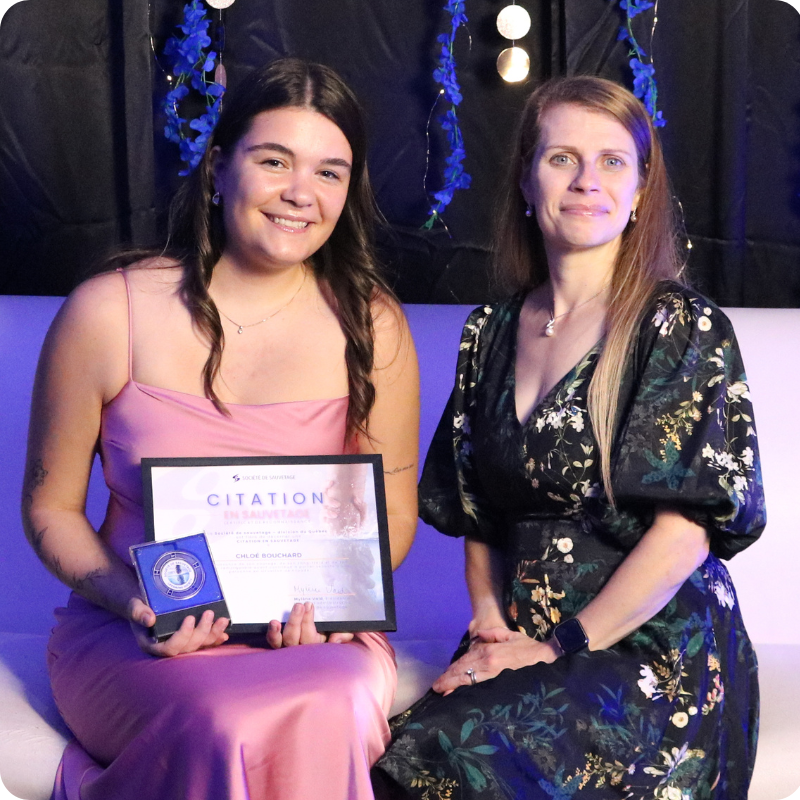
Chloé Bouchard
Cégep de la Gaspésie et des Îles
It all begins with a simple question: “Are you okay? Do you need help?”
A few moments later, Chloé enters the classroom and immediately realizes that something is wrong. A young girl is in distress. Her condition deteriorates rapidly, and she loses consciousness. Chloé lays her on the floor and begins assessing her condition. Around her, tension rises. Several people are present, some frozen by what is happening. Chloé realizes she needs to clear the area and take control of the situation.
She asks those who cannot help to step into the hallway. Someone calls 911, and first aid equipment is brought in. The automated external defibrillator (AED) is attached. For a few moments, Chloé prepares for the worst. Then, suddenly, the girl opens her eyes. It is a relief, but only briefly. She begins having seizures. Her body stiffens, her extremities change colour, and her pulse is very weak. She regains consciousness, but then her condition changes again. Chloé must constantly reassess the situation and adapt. And the ambulance still has not arrived.
The minutes seem endless. Despite the fear and commotion around her, Chloé stays by the girl's side. She monitors her condition, speaks to her and remains ready to intervene until the paramedics arrive. When they finally enter the room, Chloé explains what happened and provides them with the necessary information. The girl eventually leaves the school conscious and in the care of the paramedics. But for Chloé, the intervention is not quite over. In the hallway, students and staff members have just witnessed a particularly distressing scene. Some were frightened. Others are still in shock. So Chloé takes the time to speak with them. She explains that the girl was conscious when she left with the paramedics. She also reassures them about what they have just experienced: yes, the scene was alarming and unsettling, but the girl had received care and was doing well when she left.
That day, Chloé did more than provide emergency assistance to a young girl. cOnce the emergency had passed, she also instinctively took care of everyone who had been shaken by the experience.
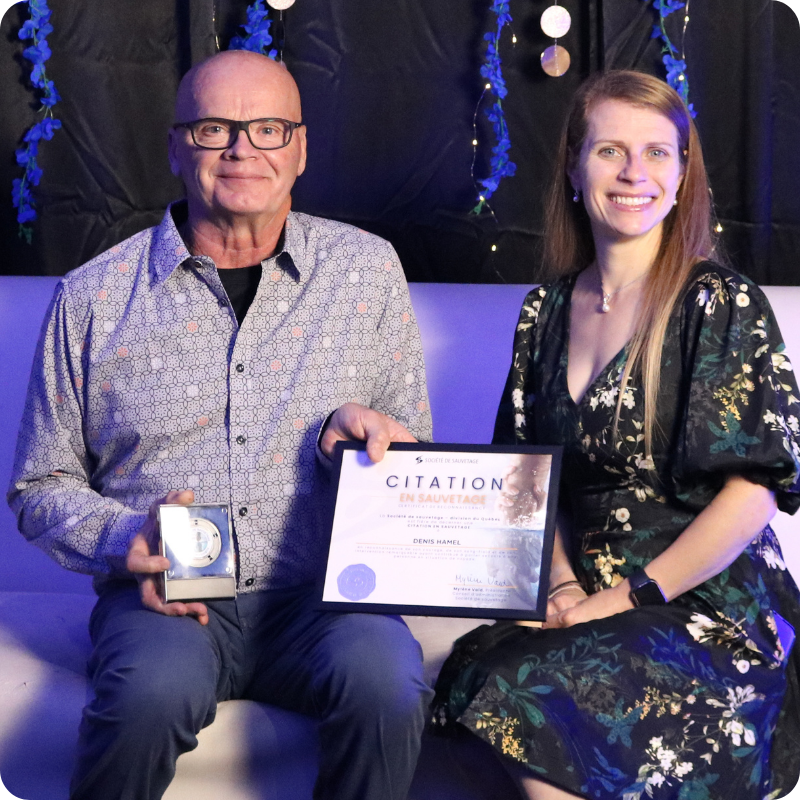
Denis Hamel
Complexe aquatique de Varennes
That day, everything seems to be running normally at the pool. Then, during a lifeguard rotation, a concern arises: a swimmer who had been in the pool just moments earlier is no longer visible. Denis reacts immediately.
He heads toward the area where he believes he last saw the swimmer. Looking into the deep end, he spots him: the man is motionless at the bottom of the pool. Denis does not hesitate. He dives in and swims down to him. He grabs the man and immediately begins bringing him to the surface.
Once at the edge of the pool, he calls for help to remove the man completely from the water. He supports his head, lays him on the ground and quickly assesses his condition. The situation is critical. Denis begins resuscitation efforts. Around him, the team mobilizes. Equipment is brought over, emergency services are contacted, and everyone does their part to assist.
Denis remains focused on the man in front of him. He continues chest compressions and the necessary resuscitation procedures, with one goal in mind: giving the man every possible chance of survival. Then, after what feels like an eternity, when every action matters, the man's condition begins to improve. Eventually, he regains enough consciousness to communicate with those around him. Denis takes the opportunity to gather as much information as possible about his health, medical history and medications. This information can then be passed on to healthcare professionals to help them understand what happened.
The man is eventually taken into care and transported to the hospital, where he remains under observation. That day, everything began with a simple observation: someone was missing. Denis could have lost precious seconds wondering where the man had gone. Instead, he checked, spotted him at the bottom of the pool and intervened immediately. A few seconds, a watchful eye in the right place and an immediate response: sometimes, that is exactly what makes all the difference.
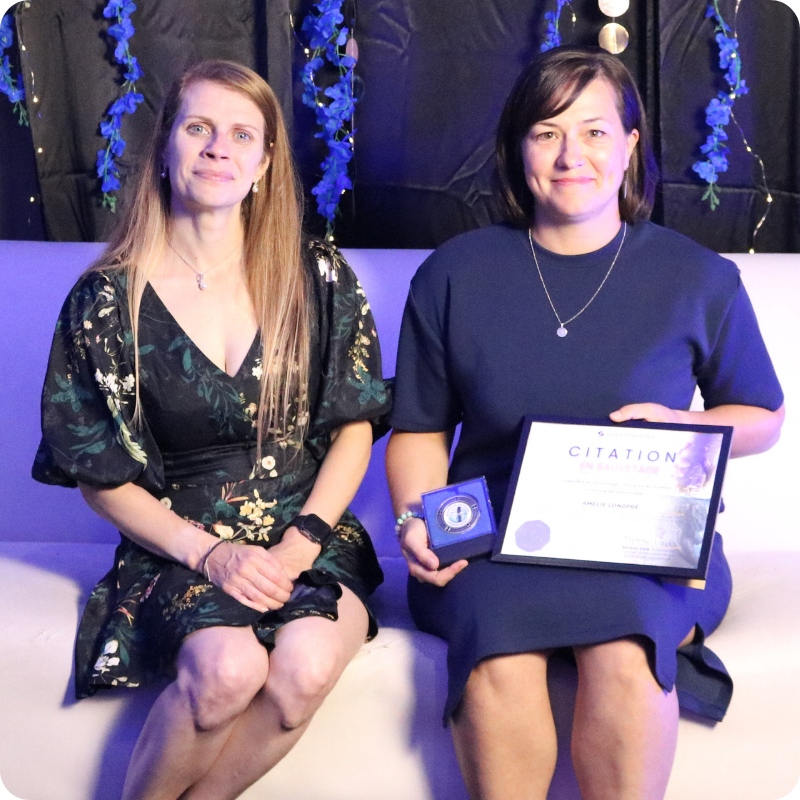
Amélie Longpré
Saint-François River
That day, Amélie is simply enjoying a family outing on the water, paddleboarding. Earlier, the family had noticed an older man kayaking alone. When Amélie's 12-year-old son spots an overturned kayak in the distance, she quickly makes the connection: it could belong to the same man. Without hesitation, Amélie heads toward him on her paddleboard.
Other boaters are already nearby and trying to help, but they have very little equipment. Amélie approaches and first tries to assess the kayaker's condition. The man is calm but says very little. It is difficult to tell whether he is simply not very talkative or beginning to run out of energy. Then, certain signs become unmistakable: he keeps searching for something to hold on to and appears increasingly exhausted.
Amélie realizes the situation is becoming serious. A life jacket is retrieved from his kayak, and the man manages to put it on. Despite this, he ends up back in the water. This time, Amélie notices that he is shivering. His chin even begins to slip beneath the surface. She needs to act, and quickly.
Amélie maintains visual contact with him. She speaks to him, reassures him and explains how to climb onto her paddleboard. With help from the people nearby, she eventually manages to get him out of the water and onto the board. But the danger is not over. The man is exhausted, and his condition could deteriorate. Amélie knows she needs help getting him to safety.
She spots a boat farther away. Using the whistle attached to her life jacket, she blows several times until the boat heads toward them. With the assistance of those present, Amélie coordinates the next steps of the rescue so the man can be brought to a safe location. The kayaker is eventually brought back safely.
That day, Amélie had simply set out to enjoy the water with her family. But when she saw a man in difficulty, her instincts took over. She observed, recognized the signs of exhaustion and, above all, acted at a moment when the man may no longer have had the strength to save himself.
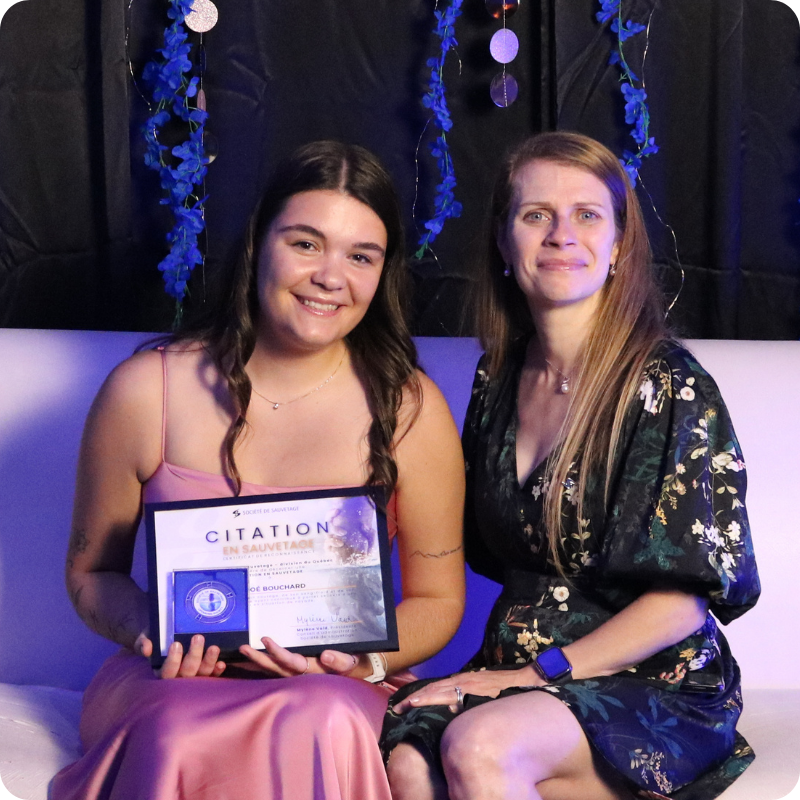
Chloé Bouchard
Pavillon des sports Marcel-Bujold
That day, Chloé notices that a young boy, approximately 10 years old, does not seem well. Sitting on a bench, he complains of chest pain, among other symptoms. He is conscious and able to speak, but his condition concerns her, and he seems increasingly tired.
Chloé continues to monitor his condition while the other lifeguards supervise the pool. At one point, the boy goes to the washroom. When he returns, she helps him settle onto a bench so he can rest. However, his fatigue increases and his symptoms persist. As his condition changes, Chloé asks for the automated external defibrillator (AED) and calls 911. The AED is attached, but no shock is advised. The boy remains conscious and continues speaking to them.
At one point, he tells his father that he is tired and wants to sleep. The wait for emergency medical services is particularly long. Nearly 45 minutes pass before they arrive. Throughout this time, Chloé stays by the boy's side and carefully monitors his condition. When the ambulance finally arrives, the boy is taken into care and transported to the hospital. But for Chloé, the experience does not end there.
That evening, she waits for news. She had been told she would receive an update. The hours pass without a response. Eventually, she reaches out herself to ask how the boy is doing. Then comes the devastating news: he has died. Chloé recalls that, at that moment, her mind went completely blank. Her first thought was: “It's my fault. I must have done something wrong.” Yet Chloé had done everything she could. She had recognized that something was wrong, called for assistance, used the available resources, contacted emergency services and stayed with the boy until the paramedics arrived.
Training prepares lifeguards to recognize emergencies and respond appropriately. But it can hardly prepare them for what comes afterward: the waiting, the questions, the doubt and, sometimes, the news that a life could not be saved. Chloé's story reminds us that behind every emergency intervention is also a person who may be profoundly affected by what they have experienced.
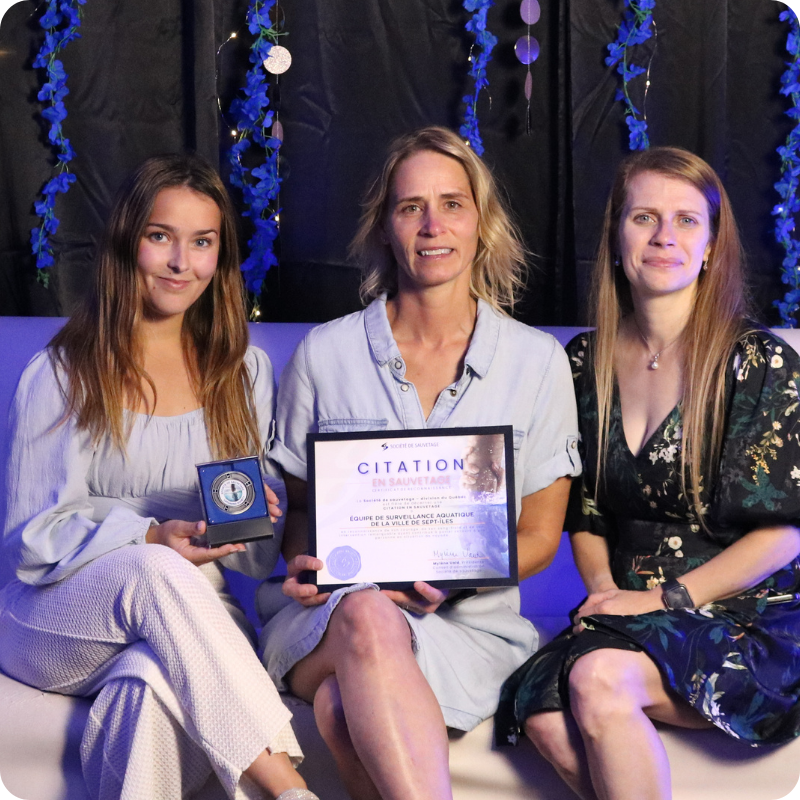
Aquatic Supervision Team
Complexe aquatique de la ville de Sept-Îles
The incident occurs during a lifeguard rotation at the pool. Benjamin notices a man at the bottom of the deep end. His position is unusual, and he does not appear to be responding. Benjamin immediately realizes something is wrong.
He dives in and swims down to the man. Once he reaches him, he grabs him and begins bringing him to the surface. The man is unconscious and requires full support. Upon reaching the surface, Benjamin alerts his colleagues. Marie Sirois and Marc-Olivier Girard quickly join the rescue, and together the team manages to remove the man from the water. Once the man is on the pool deck, his condition is immediately assessed. He is unresponsive, and resuscitation efforts begin.
While Benjamin, Marie and Marc-Olivier coordinate their efforts to assist him, the necessary equipment is brought over and emergency services are contacted. Gradually, the man's condition begins to improve. When he regains enough consciousness to communicate, the team tries to determine what may have caused his medical emergency. They ask him questions about his health and medications so they can provide emergency responders with as much information as possible.
Throughout the intervention, Benjamin, Marie and Marc-Olivier continue to monitor his condition closely until the paramedics arrive. The man is eventually taken into care and transported to receive the necessary medical treatment. He subsequently remains under observation. Just moments earlier, there had been no clear indication that a major emergency intervention would be necessary.
Benjamin's vigilance allowed him to spot the man at the bottom of the pool and immediately recognize the emergency. From that moment on, the team's rapid response and the coordinated efforts of Benjamin, Marie and Marc-Olivier ensured that the man received prompt assistance, from his rescue to the surface until the arrival of emergency services.
Actions That Make a Difference
Every rescue tells a story of courage, solidarity and presence of mind. The interventions being recognized demonstrate the importance of acting quickly and effectively when a life is in danger. Whether performed by individuals trained in lifesaving or by members of the public, these remarkable actions have saved lives and made a meaningful difference for those rescued and their loved ones.
The Lifesaving Society wishes to express its deepest gratitude to everyone being honoured for their courage, determination and dedication. These acts of bravery remind us that everyone can play a role in preventing drownings and protecting human life.
They serve as a source of inspiration and highlight the importance of fostering a culture of prevention, vigilance and mutual assistance within our communities.