Self-Rescue
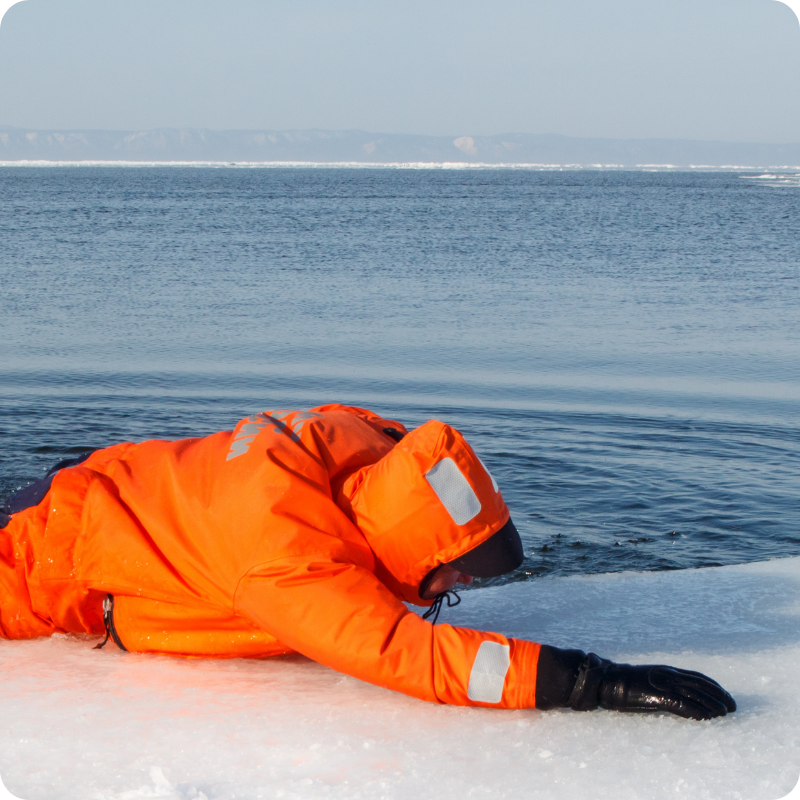
Falling through the ice can happen quickly, even when precautions have been taken. In cold water, the body’s initial reactions can affect breathing, movement and the ability to get out of the water. Knowing the principles of self-rescue before an incident occurs can make all the difference.
The first danger associated with cold-water immersion is not necessarily hypothermia. Cold shock and the progressive loss of physical abilities can compromise a person’s ability to stay afloat and get out of the water well before significant hypothermia develops.
The “1 minute – 10 minutes – 1 hour” principle is a simple way to understand the main stages of cold-water immersion:
1 minute: control your breathing;
10 minutes: use your physical abilities to try to get out of the water;
1 hour: hypothermia may progressively lead to loss of consciousness.
These timeframes are general guidelines, not guarantees of survival. Reactions and the amount of time available can vary considerably from one person to another and depending on the conditions.
When a person suddenly falls into cold water, the body may react with an involuntary gasp followed by rapid, difficult-to-control breathing. This reaction, known as cold shock, increases the risk of inhaling water and panicking.
The priority is to keep the head above water and gradually regain control of breathing.
Avoid unnecessary struggling or immediately attempting uncoordinated movements. Once breathing is under better control, focus on getting out of the water.
Wearing a PFD or flotation device designed for cold-water activities provides important protection by helping keep the airway above water during this initial phase.
Cooling of the muscles and nerves gradually leads to a loss of strength and coordination. The hands become less dexterous, while the arms and legs progressively lose their effectiveness. The ability to swim may also become impaired.
Once breathing is under control, self-rescue should be attempted as soon as possible.
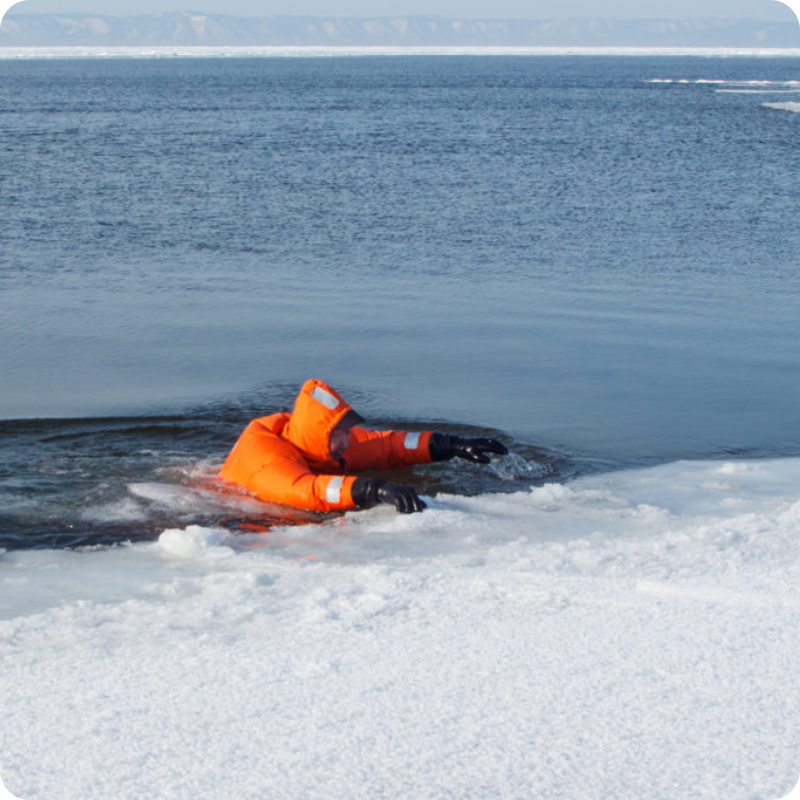
Return to the ice that supported your weight
When possible, return to the side of the hole you came from. This section of ice supported your weight before the fall and may provide a better opportunity to get out;
Place your arms on the ice and try to keep your upper body at the surface.
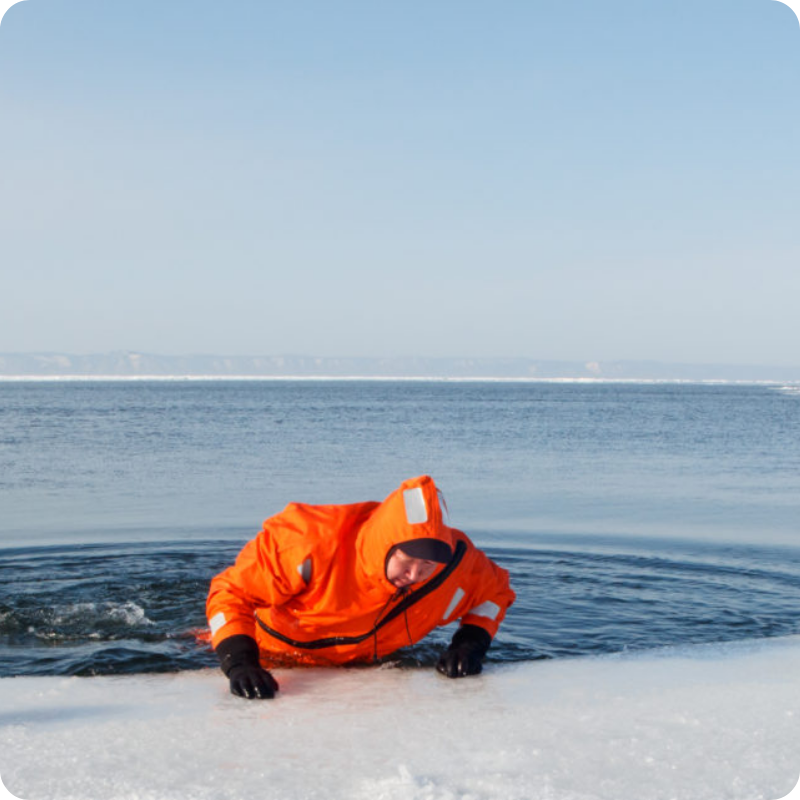
Position yourself horizontally
Kick your legs to bring your body into a horizontal position near the surface of the water;
This position makes it easier to get out and avoids pushing vertically against the edge of the ice;
Kick and pull;
Continue kicking while using your arms to gradually pull yourself onto the ice;
Ice picks carried in an easily accessible location can provide a better grip on a slippery surface.
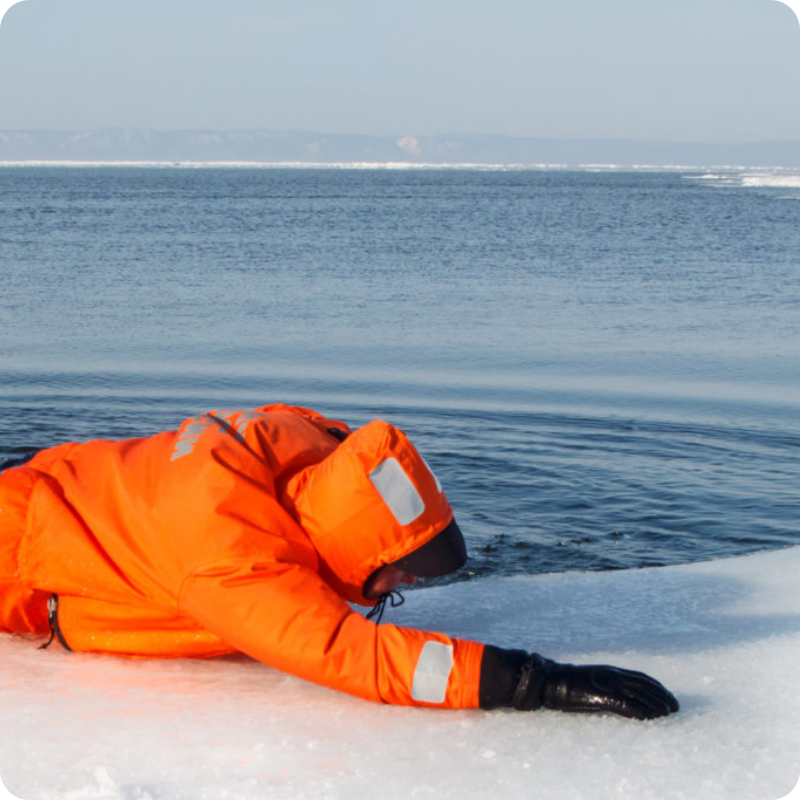
Move away from the hole without standing up
Once out of the water, avoid standing up immediately;
Roll or crawl away from the hole to distribute your weight over a larger surface. Continue in the direction you came from until you reach safer ice or the shore;
This exit technique (horizontal position, kicking, pulling, then crawling or rolling away) is also consistent with federal ice self-rescue recommendations.
If You Cannot Get Out of the Water
When self-rescue attempts are no longer successful, conserving energy becomes the priority.
Call for help and try to keep your airway above water. Support yourself on the edge of the ice whenever possible.
Avoid swimming without a specific destination or simply to try to stay warm. Movement increases heat loss and uses valuable energy. Transport Canada recommends swimming only when it is realistic to reach another person, a floating object or a safe location.
Keep your clothing on while in the water, as it can help slow heat loss. A PFD also helps conserve energy by reducing the effort required to keep your head above water.
Hypothermia occurs when the body’s core temperature drops below 35°C. It can cause shivering, reduced coordination, confusion, drowsiness and eventually loss of consciousness.
The one-hour guideline means that loss of consciousness due to hypothermia may take approximately one hour, even in very cold water. However, it does not mean that a person necessarily has one hour before being in danger.
Drowning caused by cold shock or the loss of physical abilities can occur much sooner.
Getting out of the water does not mean the danger is over. The body can continue to lose heat, particularly when clothing is wet and the person remains exposed to wind and cold.
After cold-water immersion:
Move to a sheltered and safe location as soon as possible;
Remove wet clothing when dry clothing or adequate protection is available;
Protect yourself from wind and cold;
Warm up gradually;
Watch for signs of hypothermia;
Contact emergency services if the person’s condition is concerning.
A person experiencing significant hypothermia should be handled carefully and receive medical assistance.
The ability to respond effectively in an emergency also depends on preparation before heading out.
Wearing a PFD or flotation suit designed for cold-water activities, carrying easily accessible ice picks and having a waterproof means of communication can significantly improve the chances of self-rescue and make it safer to wait for help.
Knowing what to do before an emergency occurs allows the first critical minutes to be spent taking action rather than trying to determine what to do.