10 Ice Safety Tips
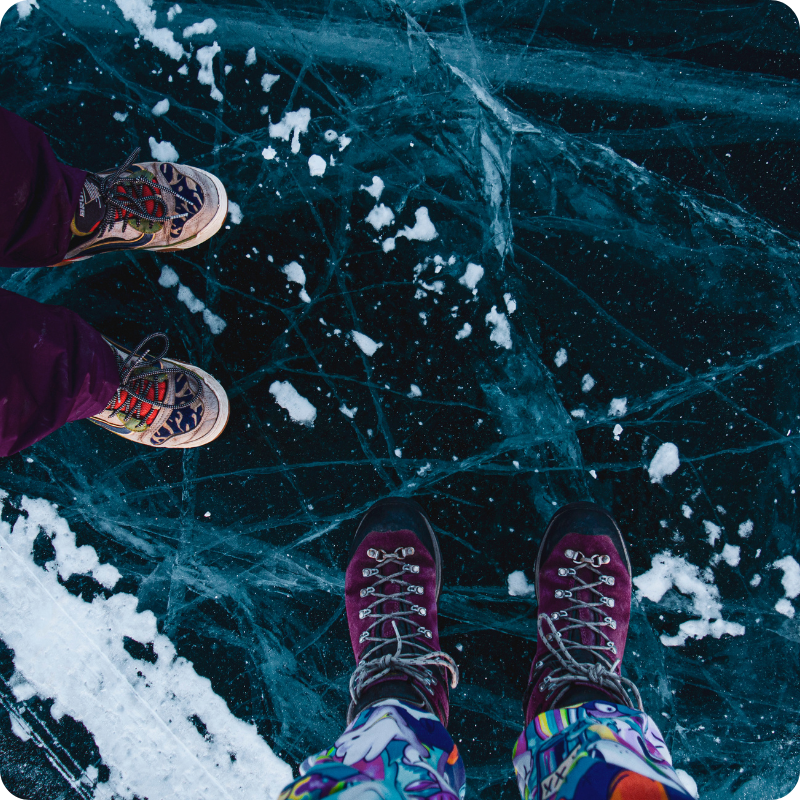
Activities on the ice require preparation and caution. Before venturing onto a frozen body of water, certain precautions can help reduce risks and improve your ability to respond if an unexpected situation occurs.
The Lifesaving Society offers 10 essential tips for safer activities on the ice. Choosing an appropriate surface, checking ice conditions, wearing suitable clothing, carrying safety equipment, travelling safely, supervising children and knowing how to respond in an emergency can all help you prepare before leaving shore.
Whenever possible, use ice surfaces that have been officially designated for recreational activities and follow the instructions provided by the responsible authorities.
Rivers, streams, areas with currents, and locations near dams, docks, bridges, inlets or outlets may have thinner or unstable ice.
Never use a surface that is closed or where conditions are uncertain.
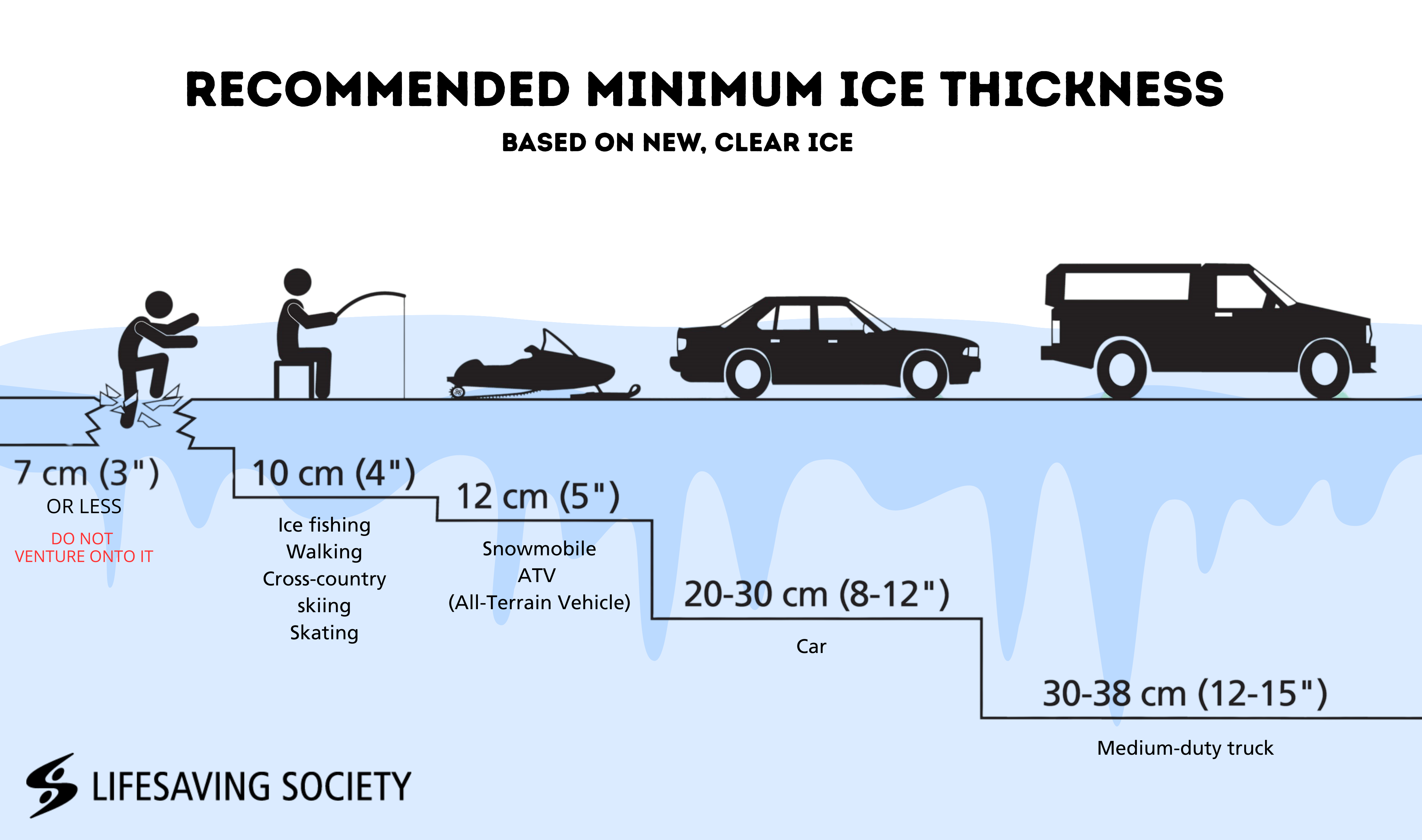
Ice thickness can vary considerably across the same body of water. Currents, water depth, snow, temperature fluctuations and environmental characteristics can all affect how ice forms and how strong it is.
When checking the ice, measure its thickness at several locations rather than relying on a single measurement.
Ice quality must also be considered: the same thickness does not necessarily mean the same strength.
Activities on the ice should be enjoyed with at least one other person. In an emergency, someone else can contact emergency services or provide assistance from a safe position.
Before leaving, share your destination, planned route and expected return time with a trusted person.
Clothing should be appropriate for the temperature, wind and activity. Wearing several layers helps retain body heat and makes it easier to adapt to changing conditions.
Pay particular attention to the extremities by wearing appropriate boots, gloves or mittens, and a warm hat.
For activities involving a risk of immersion, a flotation suit designed for cold-water activities provides additional protection by helping the wearer stay afloat and slowing heat loss.
Darkness, snow, fog and poor weather conditions can make hazards much more difficult to detect.
Cracks, open water, changes in colour or variations in the ice surface may go unnoticed.
Poor visibility can also make search and rescue operations more difficult in an emergency.
Safety equipment should be selected according to the activity and conditions.
Easily accessible ice picks can help provide grip on the ice during a self-rescue attempt. A whistle and a waterproof means of communication can also be useful for signalling an emergency.
A rope or other device that can be thrown to someone in distress can complement the group’s safety equipment.
Ice cleats can improve traction while walking, but they do not make an ice surface safer.
The weight of a snowmobile, ATV, automobile or other vehicle places a much greater load on the ice than a person travelling on foot.
The presence of tracks or other vehicles does not prove that the ice can safely support a vehicle.
Officially maintained ice roads and trails should be used whenever possible, and all instructions, restrictions and closures established by the responsible authorities must be followed.
Children must be actively and constantly supervised when near or on a frozen body of water.
The person responsible for supervision should remain close enough to intervene quickly. The boundaries of the activity area and expected behaviours should also be clearly established before going onto the ice.
The presence of other adults or children does not replace attentive supervision.
An ice rescue involves significant risks because the surface that broke under one person may also break under the weight of another.
If someone falls through the ice, contact emergency services immediately by calling 9-1-1.
Whenever possible, assistance should be provided from a safe location, such as by throwing or extending an object that can help the person stay afloat or move closer to shore.
A rescue attempt should never put a second person in danger.
Alcohol, cannabis and other substances that can impair a person’s abilities may reduce judgment, coordination, reaction time and the ability to recognize hazards.
In an environment where conditions can change quickly, these effects increase the risk of falls, poor decisions and inappropriate responses in an emergency.
For activities on the ice, staying sober is the safest choice.
Natural ice remains an unpredictable environment. No single indicator—colour, appearance or thickness—can guarantee that a surface is completely safe.
A safer outing begins with proper preparation, knowledge of current conditions, appropriate equipment and the willingness to cancel or change plans when conditions are uncertain.
When conditions are uncertain, staying off the ice is the safest choice.