Boating Safety Essentials
Canadian regulations require that a Canadian-approved lifejacket or personal flotation device (PFD) of the appropriate size be available on board for each person.
However, the Lifesaving Society recommends wearing a PFD at all times while on the water. A PFD stored in the boat cannot provide protection when an incident occurs suddenly.
Even strong swimming skills cannot eliminate the risks associated with capsizing, an unexpected fall, injury, a medical emergency or cold-water immersion.
The PFD should be:
The appropriate size;
Properly fitted and securely fastened;
In good condition;
Suitable for the activity;
Approved in Canada.
When adults wear PFDs, they also help establish good safety habits for children.
Alcohol, cannabis and other substances that can impair a person’s abilities affect judgment, reaction time, balance and the ability to respond quickly.
On the water, their effects can be intensified by the sun, wind, waves, movement of the boat, fatigue and cold.
Operating a watercraft while impaired is a criminal offence in Canada.
Sobriety is essential for the person operating the watercraft and strongly recommended for everyone on board so that each person is able to respond appropriately in an emergency.
Proof of competency is required to operate a motorized recreational watercraft in situations covered by Canadian regulations. The Pleasure Craft Operator Card (PCOC) is the most commonly used proof of competency.
Beyond regulatory requirements, various courses can help develop the knowledge needed for safer boating, including:
Navigation rules;
Reading nautical charts;
Weather;
First aid;
Use of safety equipment;
Techniques specific to the type of watercraft;
Basic marine mechanics.
Developing your skills can help you recognize hazards and respond more effectively in an emergency.
A safe outing starts before leaving shore.
Weather and marine forecasts should be checked before departure and monitored throughout the outing. Wind, waves, precipitation, thunderstorms and changes in temperature can quickly affect boating conditions.
Return to shore earlier than planned if conditions begin to deteriorate.
Mandatory safety equipment varies depending on the type and length of the watercraft. Before departure, make sure all required equipment is on board, in good working condition and easily accessible.
Depending on the watercraft, this equipment may include:
PFDs or lifejackets;
A buoyant heaving line;
A reboarding device;
Visual signals;
A sound-signalling device;
A watertight flashlight;
Navigation equipment.
Transport Canada’s Safe Boating Guide can be used to check the requirements that apply to each type of watercraft.
The overall condition of the watercraft, engine and safety equipment should be checked before every outing. Motorized watercraft should also carry enough fuel for the planned trip.
A float plan should include:
The departure point and destination;
The planned route;
The number of people on board;
A description of the watercraft;
The expected return time.
This information should be shared with a trusted person who can contact emergency services if you do not return as planned.
Before leaving, you should also be familiar with the characteristics of the body of water, including currents, tides, shoals, dams, obstacles and local restrictions.
Everyone on board contributes to the safety of the watercraft and others using the water.
Overloading or improper weight distribution can affect the stability of the watercraft and increase the risk of capsizing. Capacity limits should always be respected and weight distributed appropriately.
Pay close attention to other watercraft and to people swimming, canoeing, kayaking, paddleboarding or participating in other water activities.
Speed should be appropriate for visibility, boating conditions, the surrounding environment and the presence of other people on the water.
In a small watercraft, sudden movements or moving around can affect stability. Maintain a stable position whenever possible.
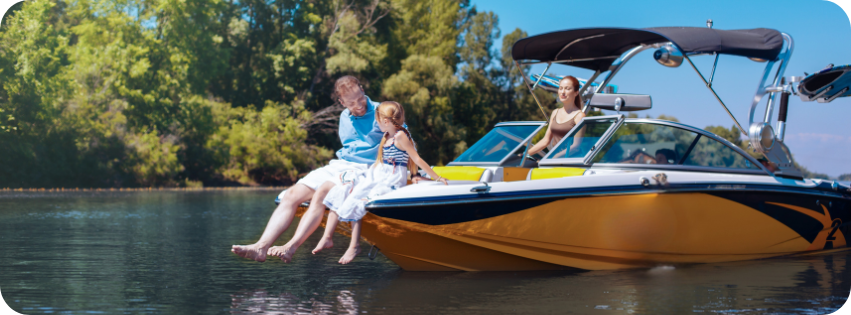
Bow riding includes sitting or standing in an area not designed to carry passengers while the watercraft is underway. This can result in a fall overboard and expose the person to the risk of being struck by the watercraft or propeller.
Sitting on the edge or bow of a watercraft in an area not designed for passengers is a dangerous practice
Water skiing, wakeboarding, kneeboarding, tubing and other activities in which a person is towed behind a watercraft are regulated under the Small Vessel Regulations.
During towing activities, certain requirements must be followed, including:
A person other than the operator must watch the person being towed and be able to communicate with the operator;
A seat must be available on board for each person being towed;
The required flotation equipment must be provided;
The activity must not take place when visibility is reduced or during periods when towing is prohibited by regulation.
These requirements apply to various activities involving towing on or above the water.
A safe and enjoyable outing depends on several complementary measures: wearing a PFD, boating sober, developing your skills, knowing the rules, checking the watercraft, planning your outing and remaining attentive to others on the water.
Proper preparation and responsible behaviour can help reduce risks and allow everyone to fully enjoy boating and water activities.