Accepted Swimwear
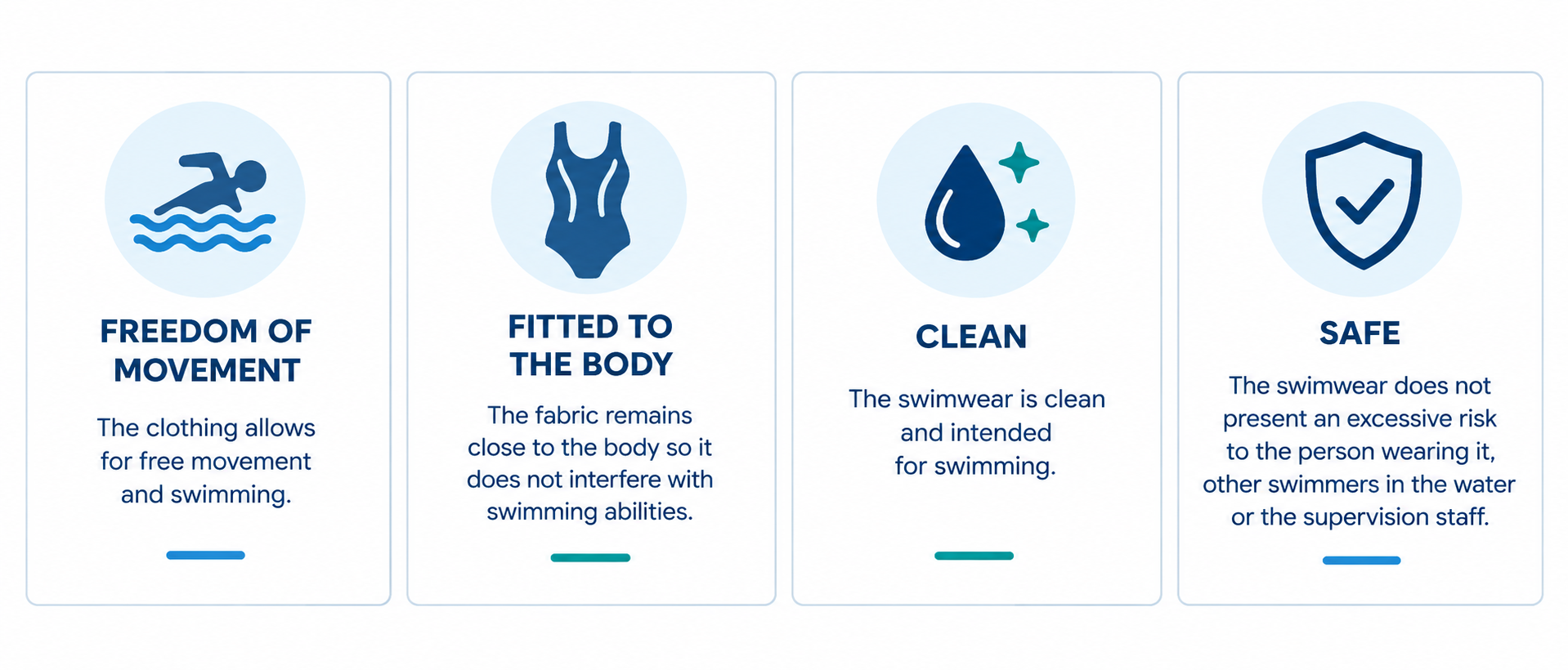
Appropriate swimwear should allow individuals to move freely and safely in the water while meeting hygiene and water quality requirements.
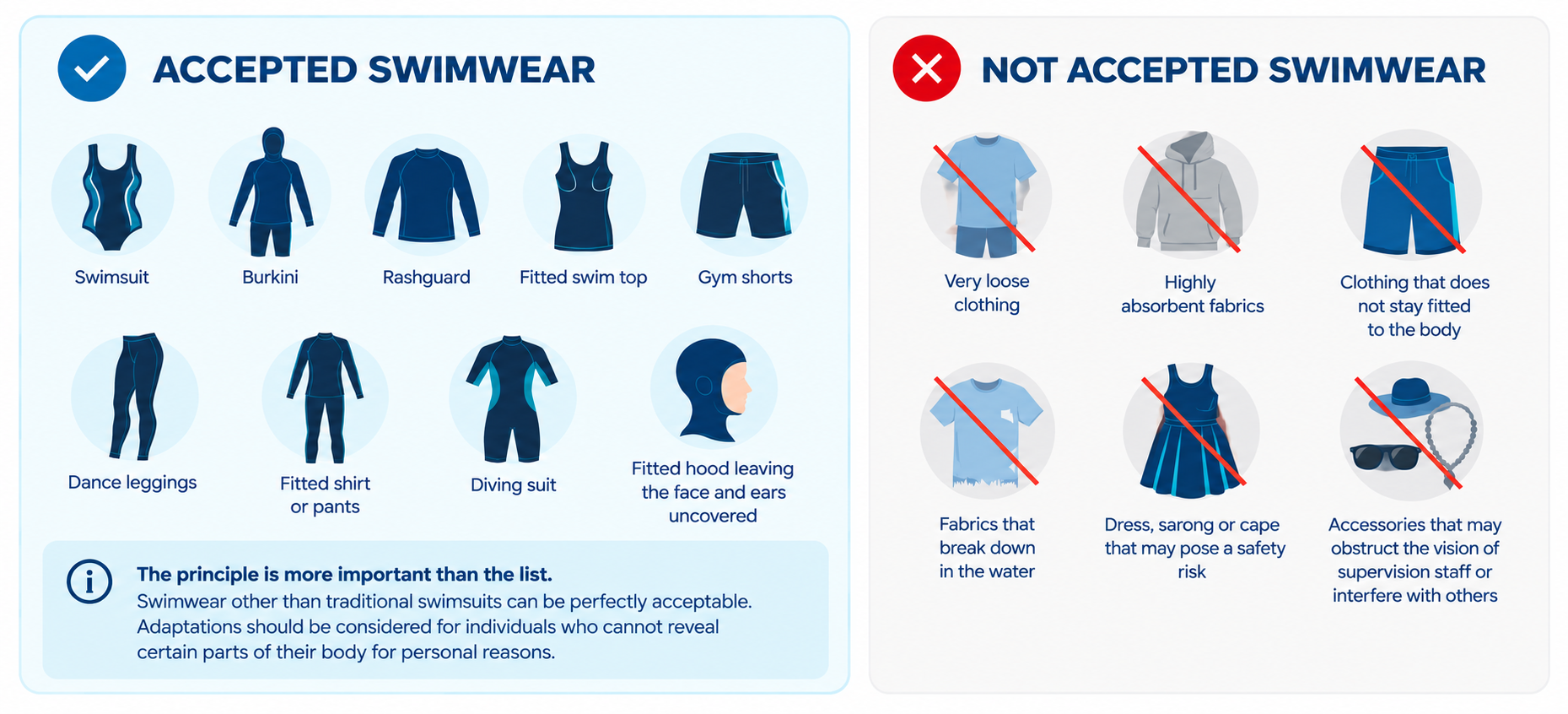
Different types of clothing may be accepted, provided they are clean, suitable for swimming, and do not interfere with swimming abilities. Aquatic facilities remain responsible for establishing their own rules based on their environment and the associated risks.
What is appropriate swimwear?
What types of swimwear may be accepted?
Why these criteria?
Safety
Some clothing can reduce swimming abilities because of its weight when saturated with water or the resistance it creates in the water.
Hygiene
Swimwear must be clean and must not interfere with water treatment. Showering before swimming also helps reduce the amount of contaminants introduced into the pool.
Supervision and rescue
Swimwear and accessories must not create obstacles to supervision, interfere with other individuals in the pool, or unnecessarily complicate a rescue intervention.
What about specific situations?
Clothing that would not normally be accepted during recreational swimming may be permitted as part of a specific activity if additional safety measures are implemented. The current position notably provides examples such as increasing the number of supervision staff, limiting the number of individuals in the pool, and using a designated area.
A swim cap can help reduce entrapment risks associated with long hair. The aquatic facility is responsible for deciding whether swim caps are mandatory.
Loaned or rented items must be subject to appropriate washing and disinfection measures. Most importantly, the person responsible for supervision should never be responsible for managing these loans while supervising the pool.
For indoor pools, the position recommends taking a shower with soap followed by rinsing. For outdoor pools, it notably recommends rinsing off excess sunscreen before entering the water.
Outdoor footwear should not contaminate areas where individuals walk barefoot. For the same reasons, the position indicates that clothing worn outside the swimming area should not be used for swimming.
Each facility establishes its own rules
Aquatic facility operators must establish rules appropriate to their environment, taking into account the risks associated with swimming, rescue interventions, and water quality. Rules should promote access to aquatic activities while ensuring a safe environment.
Alerte! La pratique de la surveillance aquatique (Société de sauvetage, 1993)
Baignade saine, Prévention de maladies infectieuses transmises par les eaux de baignade (MTEB),
Questions et réponses à l'attention des baigneuses et baigneurs (Ministère de la Santé et des Services sociaux du Québec, 2007)
International Swimming Federation, General Rules
Guide d’exploitation des piscines et autres bassins artificiels destinés à la baignade (Ministère du Développement durable, de l’Environnement et des Parcs, 2006).
L’utilisation d’écrans solaires et la fréquentation des piscines publiques (Lévesque et Rhainds, INSPQ, avril 2007)
Pratiques municipales de gestion de la diversité ethnoreligieuse à Montréal : le cas des piscines publiques (Billette, INRS, 2005)